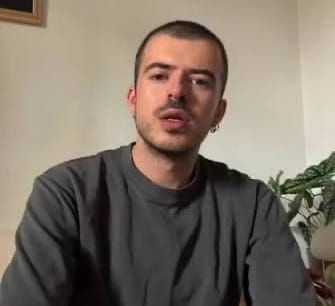
Alex Armstrong, GB News, and the Uses of a Gay Man
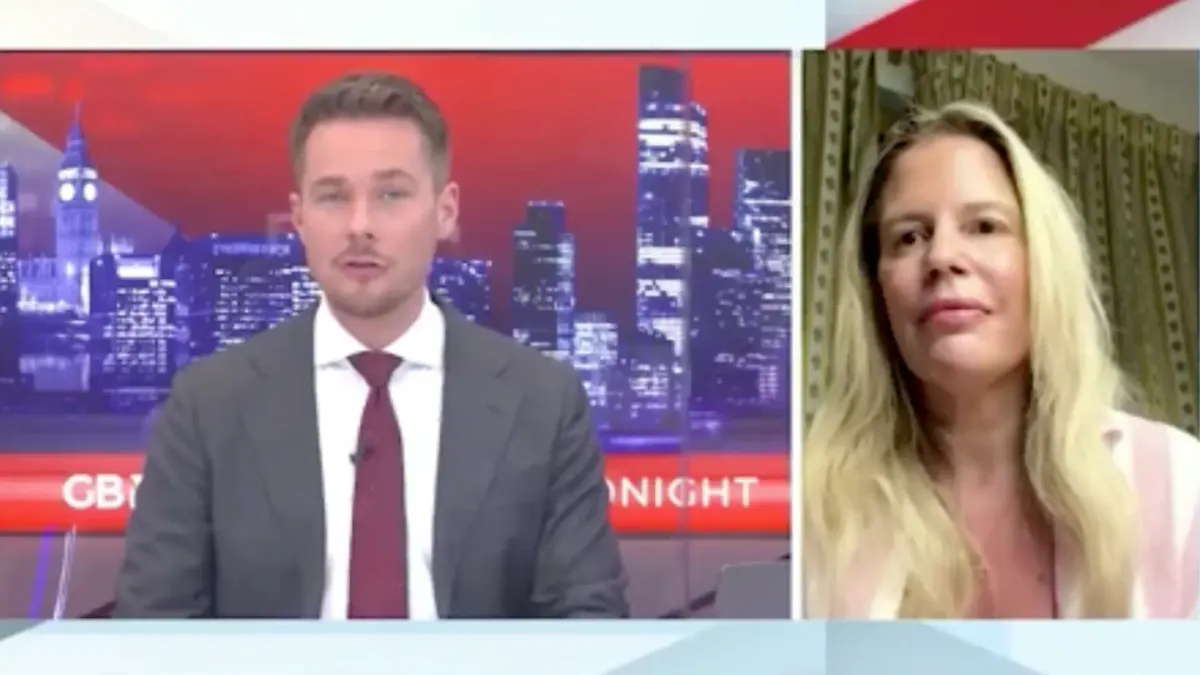
Ofcom has now logged more than 9,300 complaints about a single edition of Alex Armstrong Tonight, the GB News programme that marked the weekend of Pride in London by staging a debate about whether Pride is suitable for children, during which a guest managed to reach for bestiality and paedophilia within the same breath. The regulator is considering its position. GB News, as is traditional, has explained that the views belonged to the guest. And at the centre of it all sits a young gay presenter whose name is on the show, whose face is in every screenshot, and whose sexuality is doing a very specific job for a channel that would struggle to run this material without him.
That last part is worth a thought, and it is the thought this piece is about. But let us not begin by feeling sorry for Alex Armstrong, because Alex Armstrong has said plenty in his own voice, and he said it long before Caroline Farrow sat down opposite him.
His own words first
Rewind to last June. Armstrong, then fronting weekend output for the channel, took part in a debate on whether we still need Pride, and argued that we do not. Pride, he said, turns people off; what he sees at Pride events is fetish gear and public nudity in front of children; it stereotypes gay men, shows nothing good about the community, and millions of us, he assured the nation, would rather not be represented by it at all. The public, he explained, had got over the fear of gay people and moved on, and the real problem was a community that would not stop making a fuss. Then came the line that has followed him since, delivered as a question but functioning as a demand: do you want to be part of society, or do you want society to look at you and think you are different?
That is the assimilation bargain, stated as plainly as anyone has stated it on British television in years, and this community spent several painful decades establishing exactly why it is a con. The offer is always the same: be quiet, be tidy, be indistinguishable, and you will be tolerated. The small print is that the tolerance is conditional, revocable, and priced in silence, and the men who accepted those terms in earlier generations did not, on the whole, find that society kept its side of the deal.
Armstrong then took the clip to his own Instagram and captioned it with talk of far-left activist LGBT groups pushing their degenerate ideology down people's throats. Degenerate is not a word a gay man reaches for by accident. It has a history, that word, and none of it is friendly to people like him. So no, this is not a piece about a naive young broadcaster who wandered innocently into the wrong studio. He built this position himself, plank by plank, on camera, with a caption box and time to think.
Then July happened
Which brings us to the segment currently sitting in Ofcom's inbox. On 5 July, the day after tens of thousands marched through central London under a banner about solidarity in the face of rising hate, Armstrong's programme convened a discussion about whether any of it was suitable for children. His guest Caroline Farrow, a Catholic commentator with previous form on these subjects, declared that Pride was no longer about gay rights at all, but had become a celebration of every sexuality except heterosexuality, up to and including, in her telling, bestiality and people she described as minor-attracted.
To his credit, and it is genuine credit, Armstrong pushed back in the moment, saying he had attended and filmed Pride himself and that the overwhelming majority of people there were present for good reasons. A week later he went further, telling his viewers that conflating Pride with paedophilia is an age-old trope used to demonise and slander gay people, that he fundamentally rejected it, and that his guest's comments were lazy, offensive and had no place in the discussion.
Read that back slowly, because it is the strangest and most revealing moment in this whole affair. The man can name the trope. He knows its lineage, knows what it has been used to do to men like him, and can dismantle it fluently on live television. He is not ignorant of the machinery. He is standing inside it, describing it accurately, while it runs.
What the channel gets out of him
And here is where the story stops being about one presenter's contradictions and becomes about something colder. GB News did not invent the anti-Pride debate for Alex Armstrong. The channel has been running versions of this segment since it launched, and its file at the regulator is not thin; only last year Ofcom found it in breach of the Broadcasting Code after a comedian on Headliners compared LGBTQ+ people to child abusers, an incident that drew more than 71,500 complaints and resulted, in the end, in no sanction whatsoever. The complaints rise, the statements go out, the format survives untouched. Outrage is not a risk to this business model. Outrage is the business model.
What a young gay host adds to that machine is the one thing it cannot manufacture for itself: cover. When the segment is fronted by a gay man, every complaint arrives pre-blunted. How can it be homophobic when the host is one of them? The identity does the laundering. His presence in the chair converts a channel's editorial appetite into something that can be waved through as a community's internal debate, and every time he says we rather than they, the trick works a little better. His sexuality is not incidental to his employment. It is, on any honest reading, the single most valuable thing he brings to the building, and the channel spends it every week.
Anyone who has spent time inside British broadcasting will recognise how that offer gets made, because versions of it are made to every presenter who is in any way different: your difference is the booking. It is what makes you useful, what lets an organisation gesture at breadth while doing precisely what it was always going to do. For a man in his twenties, a nightly show with his own name on it is the kind of prize most presenters wait half a career for and never receive, and the price of it here is brutally clear. He is the shield for content he has now publicly admitted is built on a slander against his own community, distrusted by that community, indispensable to a channel whose appetite for the material shows no sign of slowing, and personally answerable, in the public mind, for whatever any guest chooses to say while he is in the chair.
That is a terrible position for anyone, let alone someone that age. But let us be precise about the terribleness. He is not a victim in the way a bystander is a victim; he auditioned for this, argued for this, captioned the clips himself. What he is, rather, is a man who accepted a bargain whose terms he perhaps understood less well than the people offering it, and who is now discovering, 9,315 complaints at a time, what the deal actually costs and who actually pays. GB News pays nothing. It never does. The bill lands on him, and on a community that has to watch one of its own hold the door open.
The moral, such as it is
The assimilation question Armstrong posed last June, part of society or apart from it, has an answer, and his own last few weeks have supplied it. He assimilated as thoroughly as any gay man in British media could: right channel, right opinions, right enemies, his difference offered up as proof of the channel's broad-mindedness. And when the oldest slur in the book was aired on his own programme, the machine did not protect him. It stood back, pointed out that the views were the guest's own, and left him to explain himself to both sides.
Society, it turns out, was never confused about whether he was different. The channel certainly wasn't. His difference was the point of hiring him. The only person the bargain required to pretend otherwise was Alex Armstrong, and on the evidence of his own furious clarity these past two weeks, some part of him may have worked that out. What he does with the knowledge is his business. But nobody watching this should mistake where the power sits, or extend to the channel an ounce of the ambivalence its presenter has earned. He is compromised. GB News is calculating. Those are not the same thing, and only one of them had a choice about what went out on 5 July.