CIRCA Soho & the Slow Disappearance of Queer London
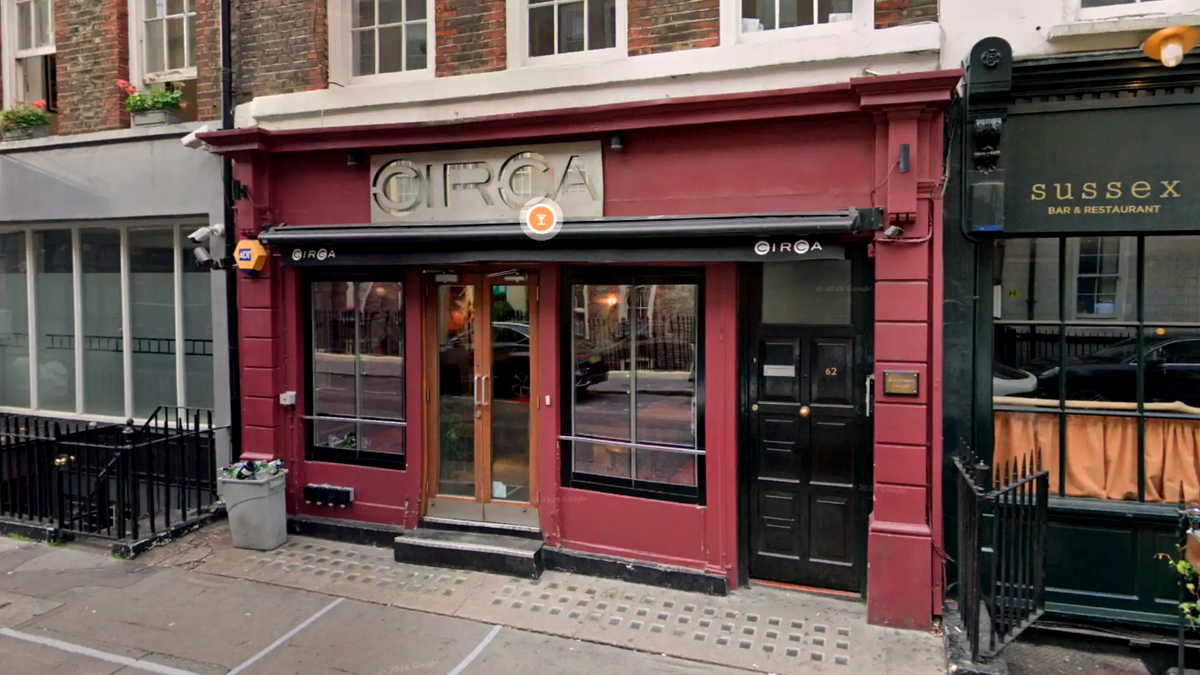
There is a particular vocabulary that attends the death of a queer venue, and it is worth paying attention to it, because the words are always so careful. Nobody is ever evicted. Nothing is ever taken. The bar simply reaches the end of its lease, as though a lease were a lifespan rather than a document drafted by somebody with an interest in the outcome, and the closure arrives with the neutral inevitability of a season changing. CIRCA Soho announced this week, in a statement posted to Instagram, that after fifteen years on Frith Street it has made the difficult decision to close as it approaches the end of its current lease. No final trading date. No villain. Just a lease, reaching its end, all by itself.
For fifteen years CIRCA did what the best queer venues have always done, which is to be several different things at once depending on what you needed from it: a cocktail bar in the afternoon for the people who wanted to sit and talk, a room of DJs and drag and noise by the small hours for the people who did not, and, in between, a door on a street in Soho that a person could walk through without first performing the calculation. It opened in June 2011, expanded to Embankment in 2018, and in its farewell statement described itself, pointedly, as a proudly independent bar, founded at a time when Soho felt different and built without any certainty of success. It had, the team wrote, just celebrated its fifteenth Pride, and was proud to have done so with all of you.
Read that last part again. They celebrated Pride, and then they announced the closure. That sequence, two weeks apart, is the entire condition of queer life in this country in 2026 compressed into a fortnight.
The numbers nobody quotes at Pride
Because this is not a one-off, and it has never been a one-off. The most useful piece of research on the subject remains the audit conducted by Ben Campkin and Lo Marshall at the UCL Urban Laboratory, commissioned by the Mayor's office, which found that London went from roughly 125 LGBTQ+ venues in 2006 to just 53 by 2017, a fall of 58 per cent in a single decade. Islington lost eighty per cent of its queer venues. Westminster, which is to say Soho, which is to say the borough everyone in the country pictures when they picture gay Britain, lost forty-three per cent. Haringey lost all of them.
The researchers were also precise about causes, which matters, because the causes are routinely mystified into vibes. Around a fifth of the closures were driven by development. Others came from failed lease negotiations and rent increases that operators had no realistic means of resisting. Some came from changes of ownership, after which a venue quietly stops being for queer people and starts being for whoever the new owner would prefer. And Campkin's team noted something the community itself has been slow to reckon with, which is that the losses have never fallen evenly: women's spaces and venues serving queer people of colour, already scarce, already under-capitalised, have been hit hardest of all, because the thinner your margins were to begin with, the less of a rent review you can absorb.
There is, of course, the counter-argument, and it deserves an honest hearing rather than a sneer. The apps happened. A generation of queer people now finds each other through a phone rather than through a doorway, straight bars are less hostile than they were, and the whole edifice of the gay quarter was arguably a response to a hostility that has, in parts of central London at least, genuinely receded. Perhaps we simply need fewer of these places. Perhaps this is what progress looks like from the inside, which is to say: like loss.
It is a tidy theory, and it survives contact with reality for about as long as it takes to read the news. Because if the argument is that we no longer need designated rooms in which to be ourselves, then the argument has to contend with the fact that in the same fortnight this venue announced its closure, a national broadcaster staged a televised debate about whether our existence is suitable for children, drew more than nine thousand complaints to the regulator, and faced no consequence whatsoever; another LGBTQ+ venue, this one in a former church, was ordered to stop operating after Christian protests; and hate crime figures continued their unlovely climb. The hostility has not receded. It has relocated, from the pub doorway to the studio and the planning committee and the comment thread, and it turns out that a phone in your pocket is not much of a substitute for a room with other people in it when the thing you need is not a date but a witness.
What Jeremy Joseph actually said
The most striking response to the news came from Jeremy Joseph, who owns Heaven and G-A-Y, and who might reasonably have been expected to greet a rival's closure with a decorous silence. Instead he pointed out that more venues mean more variety and more safe spaces, and that the health of the scene depends on there being competition rather than a monopoly, which is a rather generous thing for a competitor to say and a rather damning one for the industry to hear.
Then he said the part that should be pinned above the desk of every licensing officer in the country. It gets tougher every day continuing to run a venue. Hospitality has no support. The political climate is so scary. Safe spaces are your second home. Protect them.
That is not nostalgia. That is a man who runs the biggest queer venues in the capital explaining that the economics no longer work, and that the state which spends every June draping itself in rainbows has not, in the intervening eleven months, produced anything resembling a policy. Business rates went up. Energy costs went up. Rents went up. Late licensing got harder. And the specific thing a queer venue provides, which is safety, is precisely the thing that no landlord's spreadsheet has a column for, because from a property perspective a gay bar is simply a use of floorspace that could be a more profitable use of floorspace, and there is no line item marked "the only place in a fifteen mile radius where a nineteen year old from Croydon can hold hands in public without doing a risk assessment first".
The infrastructure conversation
Here is the uncomfortable thing about the way this community talks about itself. We are extraordinarily good at the rights conversation, at the visibility conversation, at mobilising ninety-three hundred complaints to Ofcom within a week of a slur being broadcast, and all of that is necessary work. We are dismal at the infrastructure conversation. Nobody organises an open letter about a rent review. There is no hashtag for a change-of-use application. The loss of a venue arrives as a wistful Instagram post, a round of comments about how much everyone loved it there, a final weekend of packed rooms from people who had not been in for two years, and then a hoarding, and then a chain, and then nothing.
But rights without rooms are an abstraction. A community that exists only in law and online is a community that can be legislated against, argued about on television, and dismantled by a planning inspector without anybody having to look it in the eye, because it has no address. Soho felt different when CIRCA opened, its own statement says, and it did; it was a place, with edges, and you could walk to it. What replaces it will be perfectly pleasant and it will belong to everyone, which is another way of saying it will belong to nobody, and the difference between a space that is LGBTQ+ friendly and a space that is ours is a difference that every queer person understands instantly and no valuation surveyor has ever been asked to price.
So mark the closure, by all means. Go for the last weekend. Post the photograph. But understand what is actually being reported here, because the passive voice of the announcement is doing a great deal of work. The lease did not end. Somebody ended it, or priced it beyond reach, or found a better yield, and the machinery that permitted that has now removed fifteen years of a community's habits from a street where those habits were, for a while, unremarkable. That is not weather. That is a decision, taken by people, in a system that could be changed by people, and the first step towards changing it is refusing to accept the word that has been chosen to describe it.
End of lease. Two words, doing the work of a demolition.