

Crystal: "I Fell Out of Love With Drag — And I'm Not The Only One"
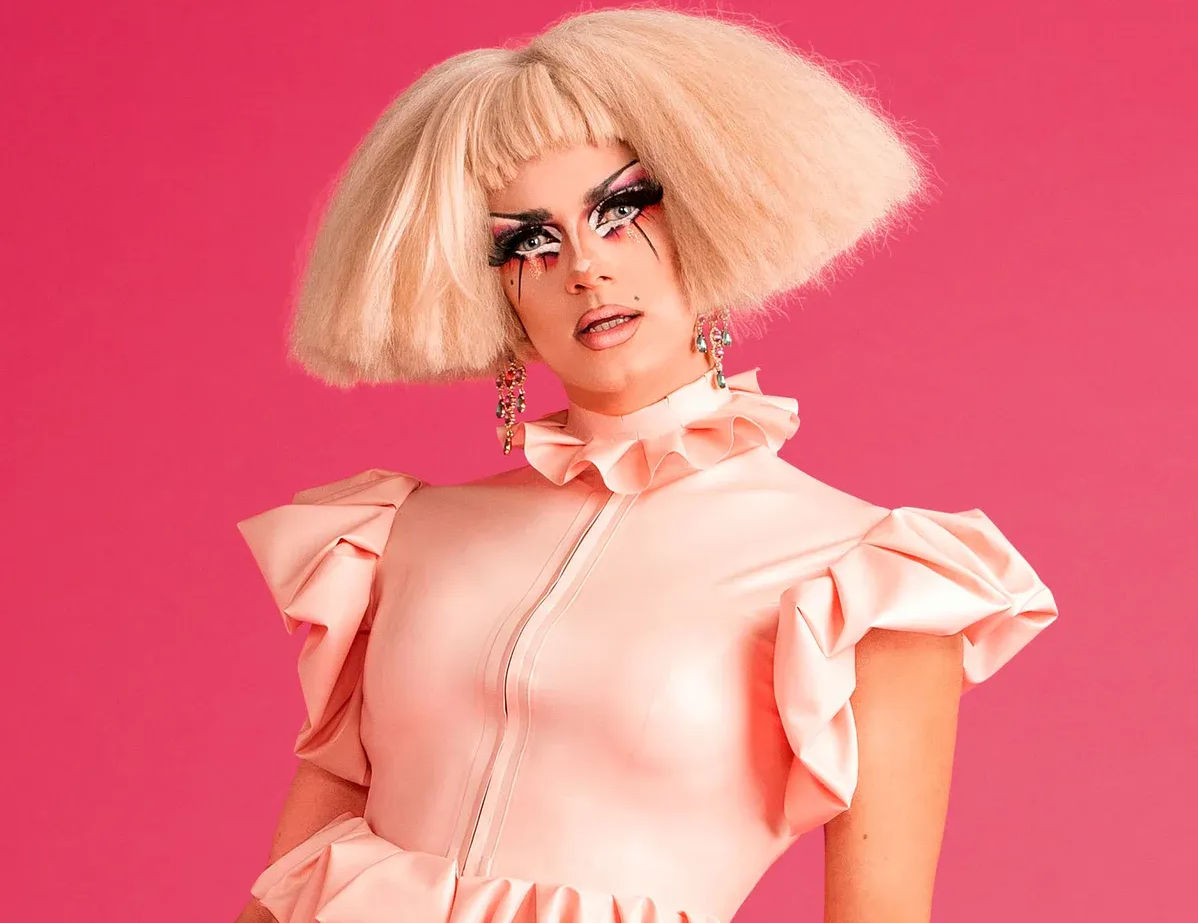
The drag artist, political commentator, and podcaster on quiet quitting drag, the Lawrence Fox saga, and why the bubble had to burst.
Crystal isn't done with drag. But drag, as she knew it, might be done with her — and she's surprisingly okay with that.
Speaking on an episode of Outcast World to Graeme Smith, the Drag Race star, DJ, and Sky News commentator laid out something a lot of people in the scene are feeling but few are saying out loud: the golden era of mainstream drag is over, and what's left isn't always worth fighting for.
"I basically went as far with drag as a person can go," she said. "So when you get that real peak, everything after starts to feel like diminishing returns. Every time you do something, there's a few less eyeballs on you."
Crystal traces the shift to saturation. For about five years, drag was the shiny new toy — corporate events, hen dos, drag brunches, brand activations. Straight audiences couldn't get enough. But that appetite has cooled, and what remains often asks performers to sand down the edges of what made drag exciting in the first place. "I felt like I was constantly choosing between my artistic voice and getting a booking," she said. "I got into this because it was exciting, dangerous, cool, scary, challenging — and none of those things were true for me anymore."
She's careful to separate that commercial cooling from the political hostility drag artists now face. The library protests, the online abuse, the far-right rhetoric — she sees that as a different problem entirely, driven by people who were never the audience in the first place. "Those people are actually so fringe," she said. "The real problem is that everyone else just got bored."
So Crystal is following what she calls her bliss. She's producing house and techno. She's a regular face on Sky News debating queer issues. And she's launched Camp Classics, a podcast with fellow drag artist Baby Lame where they dissect the films gay men have loved for decades — from Death Becomes Her to Notes on a Scandal. "We need more levity," she said. "I have a habit of getting a bit too self-serious, so forcing myself once a week to just live in a little queer bubble is really good for me."
The conversation inevitably turned to the legal battle that's followed her for nearly six years. After a public exchange in which a well-known figure used a homophobic slur against her on television, Crystal called him a racist. Both parties sued. Crystal won her side — the court ruled she was defamed — but the countersuit continues, heading back to court this summer. "Would I do it again? I think so," she said. "But how is anyone supposed to get justice when it's a six-year process?"
On politics, she's bullish about the Greens, furious with Labour, and terrified of what a Reform government could mean for queer communities. "I refuse to accept Tory-light from Labour and say that's the best we deserve," she said. "While we can, we should be demanding something much, much better."
Crystal hasn't quit drag. She's just stopped pretending that doing it for the wrong rooms, on someone else's terms, counts as the same thing.
Listen to the full interview on Outcast World, available wherever you get your podcasts.