EDINBURGH FRINGE 26 - Joey Jennings and the little pink dress
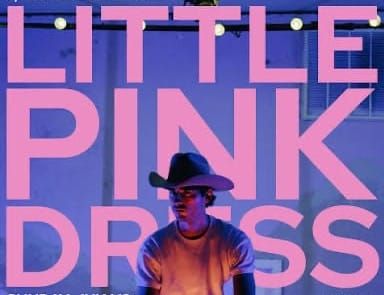
There is a moment, roughly halfway through his conversation with Outcast World, when Joey Jennings describes himself as a passenger in his own car, panicking, while somebody else steers. Asked who is driving, he answers without hesitating: the wise self, with young Joey sitting on his lap, and a great many other versions of him further back, because at this point the car has become a bus.
It is the neatest summary anyone could offer of Little Pink Dress, the show Jennings brings to C aquila until the end of the month, and it explains why a run of twenty-one country rock songs written in a Los Angeles bedroom in the summer of 2020 has taken six years to reach an audience.
A song at four in the morning
The whole thing began in May of that year, around his birthday, in what he describes as a low headspace. Unable to sleep, he started writing at three or four in the morning, and the song that emerged turned out to contain every thread the show would eventually pull on. He went to bed, woke up, wrote a second one, and the rest arrived across that summer.
Three subjects hold it together: pursuing a dream in Los Angeles, growing up gay, and his relationship with his mother. The dress itself was her suggestion. When he told her what he was writing, she said that if she were making a one-man show she would certainly write about his little pink dress, the one he wore as a six or seven year old, slept in, danced in and did everything in, generally with the bedroom door shut and the Spice Girls on.
Musically it runs further than the country rock billing suggests, taking in musical theatre, traditional Sicilian folk and, for reasons that make more sense in the room, a Christmas song.
Ten years of the serious actor dream
Before any of this, Jennings was a working actor in Los Angeles with real credits, which sounds like the good version of the story until you hear him describe it. He gives the pursuit a little over ten years and calls it exhausting, draining, and something that killed his spirit. The arithmetic of it was brutal in a quiet way: book one thing a year, take that as evidence to keep going, and then sit through the long gap until the next one.
Asked what that version of him was like, he takes a while, and never entirely lands on an answer. What he does say is that Hollywood had him playing a straight character, and that the effort of maintaining a hyper-masculine version of himself is precisely where the country music enters the show. A cowboy figure appears as the mask, gets stripped away over the course of the hour, and occasionally goes back on when things get difficult.
He is careful to note that friends and family, encountering the songs for the first time this year, have concluded he is pivoting to country. He is not. He grew up on it, he enjoys the narrative storytelling in it, and he had never written any before 2020.
Getting sober, and getting out
Jennings got sober in 2023, before the music was recorded, went into therapy in early 2024 and did a year of it intensively, and spent most of that period on the fence about leaving. He moved to New York in 2025, and the contrast he draws between the two cities is the sharpest line in the interview: in Los Angeles you are shamed for having a dream, and in New York it is faintly embarrassing not to have one. Living in the former, he says, was like swimming around in an open wound.
The album was recorded in Nashville with an eight-piece band, and the ambition is still to stage the show that way. The Fringe version is stripped back to instrumentals and one performer, which he describes, accurately, as having nowhere to hide.
The hardest part was letting people hear it
All twenty-one tracks sat finished for at least two years. Jennings did not begin sharing them until May of this year, and describes the release of control, over who hears the songs and on what headphones, as the single hardest part of the entire project and a daily practice rather than a decision made once.
Direction comes from Coral Cohen, a friend from high school, who heard the songs acoustically in Los Angeles several years ago and told him he had two shows on his hands: a vulnerable one-man piece and a gay cabaret. He chose the first. It took until January of this year for him to decide he simply had to get it out of himself.
He is also, until very recently, not a social media user, having taken it up purely to promote the show and describing it as a comparative hellscape with no context attached to anything anyone posts. He is treating Instagram as a website, which is either enormously healthy or the most doomed plan at the Fringe.
For her
His mother has not yet seen the show, which is complicated by the fact that a great deal of it is about her, or more precisely about his perspective on her. She began losing her hearing when he was a young teenager and is now close to fully deaf, which sits awkwardly against her being, by his account, a serious music person and the one who put John Denver, Arlo Guthrie, Gordon Lightfoot and the Chicks in front of him as a child. She is, as he puts it, in the DNA of the music.
The relationship has been turbulent and is, he says, in a good place now, taken a day at a time. She sent a child to art school, he points out, so she may have suspected something like this was coming. What he keeps returning to, particularly since the New York performances, is that the whole thing is for her.