The Power of Love- Thirty Five Years of Brighton Pride
At around half past eight last night, Diana Ross walked onto the main stage at Preston Park and half a million people's weekends arrived at the moment they had always been building towards. Somewhere in that ninety minutes she sang I'm Coming Out, a song written for her in 1979 after Nile Rodgers watched drag queens dressed as Diana Ross holding court in a New York club and realised the community had already claimed her, whether she knew it or not. Forty seven years later, there she was, closing the biggest Pride festival in the country, singing the line back to the people who wrote its meaning. If you wanted a neater illustration of how queer culture works, of how we take what we are given and hand it back transformed, you would struggle to script one.
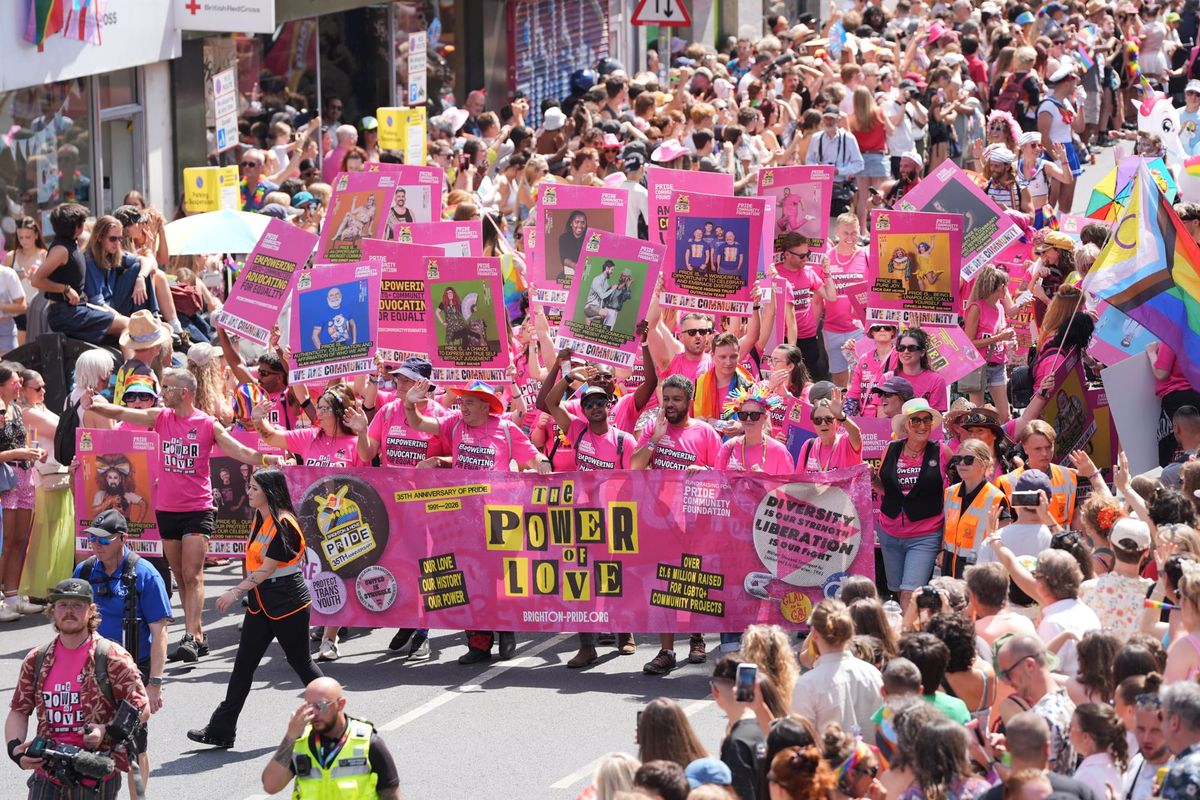
This weekend Brighton and Hove Pride turned thirty five. The theme was The Power of Love, subtitled our love, our history, our power, and for once the branding felt less like a slogan cooked up in a marketing meeting and more like a statement of intent. Because the history matters here, and Brighton has more of it than most.
Where this all comes from
The convenient version of the story starts in 1991, when Pride as Brighton knows it today was reborn and began its long climb towards the two day festival, community parade and citywide takeover it has become. The truer version starts in 1973, when the Sussex Gay Liberation Front organised the city's earliest marches at a time when visibility was not a lifestyle choice but a genuine risk, when being seen holding a placard could cost you your job, your family and occasionally your safety. Those marchers did not have headliners or wristbands or a VIP dance arena. They had each other and a conviction that the closet was a prison built by other people.
What happened between those two dates is the part worth sitting with now the tents are coming down. The community that rebuilt Pride in 1991 did so in the teeth of Section 28, the law that told teachers they could not so much as acknowledge our existence, and in the middle of an AIDS crisis that was hollowing out a generation while the government looked away and the tabloids sharpened their knives. Brighton, a city that had long been a refuge for queer people priced out of London's scenes or fleeing smaller towns, buried too many of its own in those years. That Pride returned then, at the lowest point, is the fact that reframes everything else. It was not a celebration that grew into a protest. It was a protest that earned the right to celebrate.
Holly Johnson understands that arc better than most, which is why his appearance in the legends slot on Sunday afternoon carried a weight that no amount of eighties nostalgia programming could manufacture. The Frankie Goes to Hollywood frontman, whose biggest hit was banned by the BBC for being too honest about sex, was diagnosed HIV positive in 1991, the same year this Pride was born. Both are still here. Both are thriving. There is a version of queer history in which neither of those sentences is true, and everyone in that park old enough to remember knew it.
The weekend that was
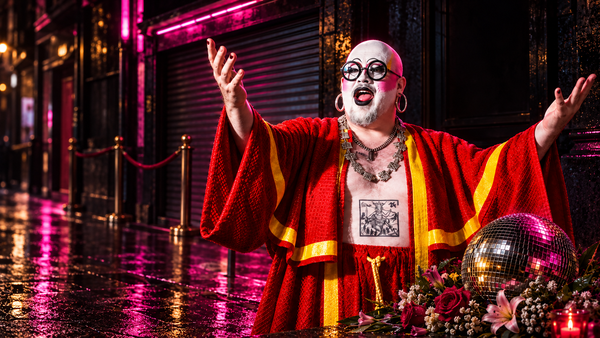
Saturday began the way it always does, with the community parade setting off from Hove Lawns and winding up through the city to Preston Park, tens of thousands of people turning the streets into the country's largest moving argument for joy. The parade remains the free, unticketed, gloriously chaotic heart of the whole enterprise, the bit that belongs to everyone, from the drag queens sweating through sequins in August heat to the dads pushing buggies draped in flags to the union branches and NHS workers and school groups who march because they understand that solidarity is a verb.
Then the park. RAYE closed Saturday night with a full ninety minute headline set, and the trajectory alone tells you something about how these stages work. She played Preston Park in 2018 as a support act, came back in 2022 supporting Christina Aguilera, and returned this weekend at the top of the bill with a Brit Award haul behind her and a new album on the way. Brighton watched her become RAYE in real time. Before her, Self Esteem delivered the kind of set that reminds you pop music can be both communion and confrontation, Jessie J did what Jessie J has always done to a festival crowd, and RuPaul made a first ever Brighton appearance with a DJ set in the icon slot, which remains a genuinely remarkable sentence given that the most famous drag queen on the planet had somehow never made it to the most famous gay city in Britain until its thirty fifth birthday.
Sunday built differently, all texture and contrast. Pale Waves in the afternoon sun, Melanie C behind the decks, Paris Hilton doing whatever it is Paris Hilton does, which turned out to be considerably more knowing and more fun than her critics ever allowed, and Five wringing every drop of millennial nostalgia out of a crowd that grew up taping them off the radio. In the dance arena, Armand Van Helden closed a Sunday programme that had already given the crowd HAAi, Hannah Wants, I. Jordan and Girls Don't Sync, a lineup that quietly did more for representation behind the decks than most festivals manage across a whole season.
But the honest truth about Preston Park, the thing regulars know and first timers discovered this weekend, is that the main stage is only ever half the story. The Legends Cabaret Tent ran a conveyor belt of Brighton drag royalty all Saturday afternoon, twenty minute slots passed hand to hand like a relay baton, performers who have held this scene together through venue closures and funding cuts and every hostile news cycle. The Cocoa Butter Club centred queer performers of colour. Queer Town and MELT and Bears in the Woods each ran their own weekend within the weekend. And over at the LGBTQ+ Soapbox, Peter Tatchell, who helped organise Britain's first Pride march in 1972 before Brighton had even held its own, sat for a fireside chat within earshot of a festival he could not have imagined and helped make inevitable. The distance between a man with a megaphone in 1972 and Diana Ross on a Sunday night in 2026 is the entire story of this movement, and this weekend you could walk between the two in about four minutes.
Why it still matters
There is a lazy critique of modern Pride that says it has become too big, too corporate, too much of a party, and Brighton, as the biggest of them all, catches the sharpest version of it. The critique is not entirely wrong about the sponsorship logos, but it misses the point of what the ticketed park actually funds, which is the year round grant programme for local LGBTQ+ community groups, the unglamorous infrastructure of queer life that no brand activation will ever pay for. And it misses something more fundamental, which is that the party was never the opposite of the protest. It was always the point of it. The Sussex Gay Liberation Front did not march in 1973 so that we could be tolerated. They marched so that one day half a million people could dance in a park in the open air without looking over their shoulders.
That day is not guaranteed to last. Rights that took fifty years to win are being loudly relitigated across the Atlantic and increasingly at home, and trans people in particular are living through a moment that feels grimly familiar to anyone who remembers the Section 28 years. Which is exactly why a thirty fifth anniversary spent looking backwards was also the most forward looking thing Brighton could have done. The Power of Love is a fine theme for a festival. As a strategy for survival, it has a thirty five year track record.
Diana Ross finished singing, the park emptied, and this morning Brighton is sweeping up glitter that will still be surfacing in pavement cracks at Christmas. The weekend is over. The reason for it is not.