

The Silence Around Sexual Violence in the LGBTQ+ Community
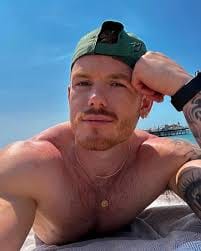
Researcher Kyle Pritchard joined Outcast World to discuss his doctoral study into sexual assault within LGBTQ+ communities — and why so many survivors never come forward.
Kyle Pritchard is no stranger to difficult conversations. The mental health researcher, who some may remember from his appearances on Courtney Act's The Bi Life around seven years ago, has turned his focus to one of the most underexplored areas of LGBTQ+ experience: sexual violence, and the barriers that prevent survivors from disclosing it.
Speaking on Outcast World, Pritchard — who is himself a survivor of sexual assault — explained that while rates of sexual violence within the community are staggeringly high, the research base remains thin. Gay and bisexual men are estimated to be between two and six times more likely to experience sexual assault than their heterosexual counterparts, and roughly 40% of gay men and nearly half of bisexual men have reported sexual violence in their lifetimes. Yet behind those figures lies an even starker reality: around 86% of those who are sexually assaulted never come forward to report it.
"We know the community is heavily targeted," Pritchard said. "But what we don't know enough about is why people don't come forward, and what survivors actually need in order to tell."
His doctoral research is attempting to answer exactly that. What he's finding is a tangled web of self-blame, institutional ignorance and identity-based stigma that effectively silences survivors at almost every turn. Many don't have a clear pathway for reporting. Those who do seek help often encounter healthcare professionals who lack understanding of queer contexts — scrutinising their identity rather than addressing the assault itself.
One participant in Pritchard's study described being assaulted in a party environment. Disclosing that to a professional who didn't understand the setting meant having to explain not just what happened, but why they were there in the first place — a process that compounds shame rather than relieving it. "That in itself is silencing," Pritchard said. "The survivor ends up feeling the self-blame, when it should be the professional's job to take that blame away."
The downstream effects are severe and cumulative. Depression, anxiety, PTSD, suicidal ideation, substance use, difficulties with trust and intimacy — all are more prevalent among LGBTQ+ survivors, and all ripple outward into every area of a person's life. Pritchard stressed the importance of early intervention, but acknowledged that intervention depends on disclosure, and disclosure depends on an environment that makes it possible.
He also challenged the assumption that only the most extreme forms of assault warrant support. Being groped in a club, he pointed out, can carry the same psychological weight as more severe acts. "It's not for anyone other than the individual to express how that made them feel," he said. "We need to normalise seeking help across the full spectrum."
If he could change one thing overnight, Pritchard said it would be deeper, LGBTQ+-specific training for healthcare professionals — starting with dismantling the persistent myth that sexual assault only happens between a man and a woman, or that it looks like a stranger in a dark alley. "It normally happens with someone known to the survivor," he said. "And some people might not even label what happened to them as sexual assault — which stops them from telling in the first place."
Specialist services like Galop and Survivors UK are doing vital work, Pritchard added, but the wider system has a long way to go.