Has Burnham saved the left?
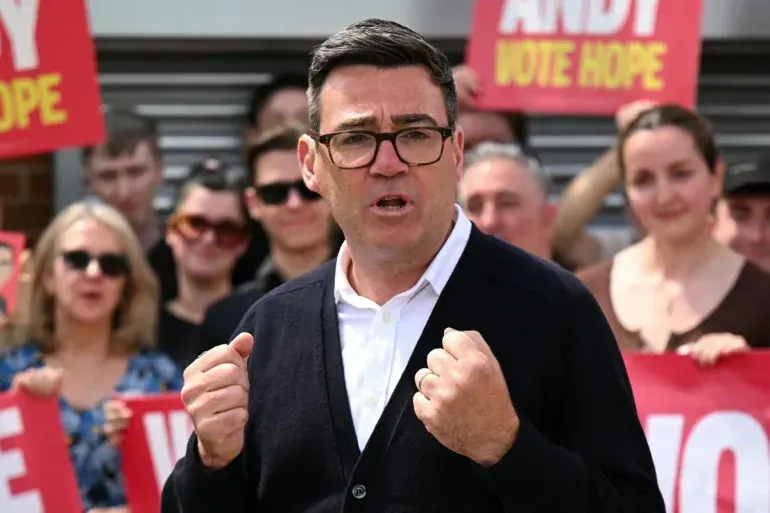
The morning after Makerfield, it was hard not to feel the old flutter. A working-class town that the entire commentariat had quietly written off to Reform looked the hard right in the eye and chose the man from Leigh instead, and for a few hours the British left permitted itself the one thing it has rationed so carefully since 2019, which is hope. Andy Burnham is not yet leader of the Labour Party, and may not be for a while, but the seat he has taken is the doorway to it, and everyone in Westminster understands that the only remaining question is when.
It is worth asking, then, while the bunting is still up, what kind of left he is offering, and whether queer people sit inside it or merely stand near the entrance.
On the economics, the offer is real, and it is recognisably of the left. Burnham talks about a country that has spent fifteen years in hock to the bond markets and proposes to haul it out; he floats public ownership of key industries, an end to the austerity settlement that hollowed out the towns he grew up among, and a reform of the Westminster whipping system that only a prime minister could ever attempt. Starmer, rattled, has compared all of this to Liz Truss, which tells you less about Burnham's sums than about how frightened the leadership has become of a rival who can speak to the very voters the party has been busy losing. After years of managerial caution, here is a senior figure willing to argue that the state should do more and apologise for it less, and for a great many people on the left that alone is worth the ticket.
For queer people specifically, the record is better than the reflexive cynicism allows. As mayor he built the first city-region LGBT panel in the country, moved public money away from anyone peddling conversion therapy, and used the platform of Manchester Pride to say plainly that he supports trans rights and wants that known. When the Supreme Court redefined sex as biological and most of his colleagues discovered urgent business elsewhere, he called the resulting guidance confusing and reached, awkwardly but audibly, for live and let live. It cost him. Donors walked. He has, in other words, been braver on this than almost anyone of his seniority, at precisely the moment that bravery turned expensive.
Here is where the small print begins. The left and the LGBTQ community are not the same constituency, however often our flags share a march, and Burnham's leftism is selective in ways that ought to trouble anyone who reads the whole manifesto rather than the welcome page. In the run-up to the by-election he told local radio that he wants greater use of immigration detention and faster removals, and that he agrees with Nigel Farage about the need to restore a sense of order. He has backed his own party's crackdown on asylum, the one his former deputy described as un-British. None of this is the full Reform programme, and it is fair to him to say as much, yet the framing is borrowed wholesale from the right, and framing is how permission is quietly granted.
That matters to us, because minorities are not a single block that rises and falls as one. A settled gay man in a London suburb and a queer teenager in an asylum hotel do not draw the same dividend from a Burnham government. The first gets a prime minister who will defend his marriage and his pronouns. The second is precisely who a sense of order is built to remove. To cheer the one while looking past the other is to accept a version of liberation that stops politely at the passport queue.
So the honest posture is neither the swoon nor the sneer. Burnham may well be the best on offer, the rare communicator capable of draining the heat out of the culture war rather than stoking it for sport, and a Labour Party in his hands would almost certainly be a safer place to be visibly, stubbornly queer than one led by the men now circling the wreckage of this government. He may also be a man who, walking toward power, reaches first for the migrant to put over the side. Both things are true at the same time, and the job of a queer press is not to choose the flattering half. It is to hold him to the better one.