Now I tiptoe, just in case...
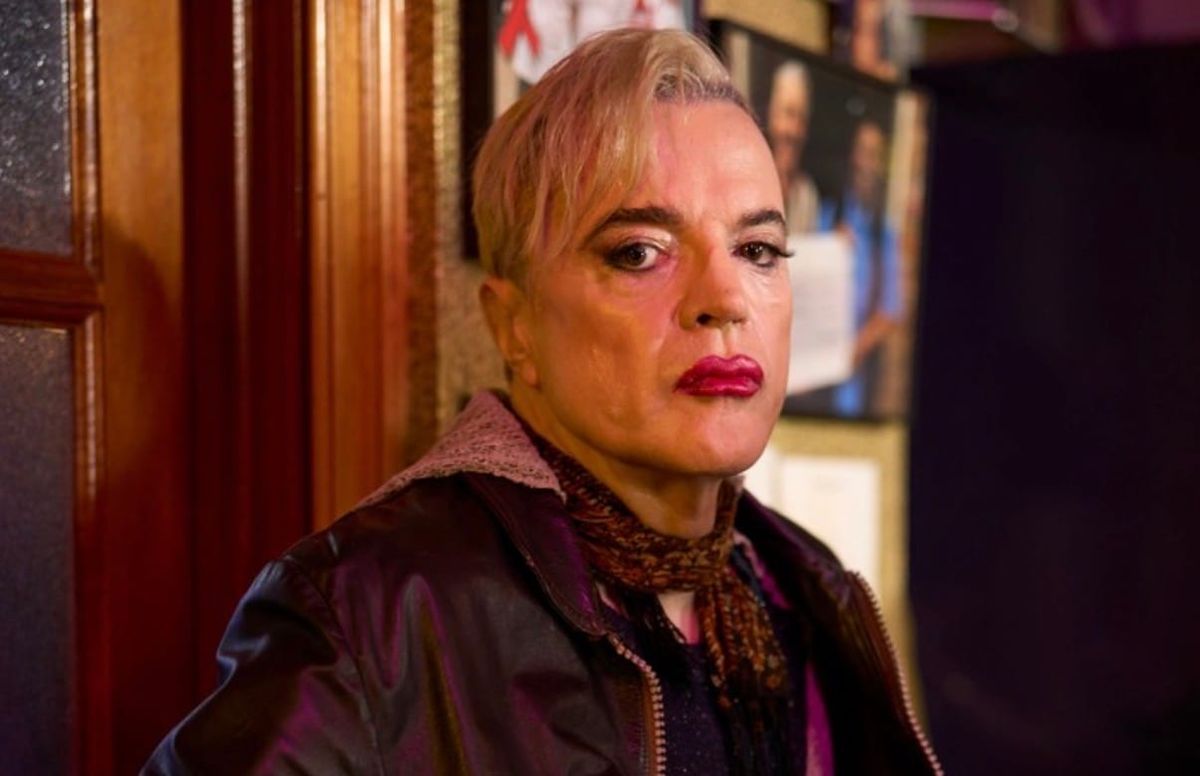
The Tip Toe speech thats had Outcast followers crying
There is a particular kind of television moment that stops being television. It leaves the screen and travels out into the world through group chats and voice notes and screenshots, until it arrives in your inbox at one in the morning from someone you have not spoken to in years, who simply needed to tell another person that they had seen it too. Melba's speech in Russell T Davies' new Channel 4 drama Tip Toe has become exactly that kind of moment, and since the series launched on 31 May our messages have not stopped coming.
For those still catching up, Tip Toe is a five-part thriller set around Manchester's Canal Street, the same stretch of the city where Davies first made his name a quarter of a century ago. Alan Cumming plays Leo, the warm and quick-witted owner of a bar called Spit and Polish, and David Morrissey plays Clive, the long-standing neighbour who slowly curdles from a familiar face into something far more frightening. Davies has described it as his angriest and darkest work yet, and he has been blunt about why he felt compelled to write it, telling interviewers that the world is getting stranger and tougher and that the fight is back on. This is the same writer who gave us Queer As Folk and It's a Sin, so when he says the climate has changed for the worse, it carries the weight of someone who has spent thirty years documenting where we have been.
The line that has come to carry the whole series belongs not to either of the leads but to Melba, a fixture at the end of the bar played with astonishing tenderness by Paul Rhys. Melba is the conscience of the piece, half wit and half prophet, the sort of older gay man every scene needs and every bar used to have. He has watched the village change around him across decades, and when he finally says aloud what he has been feeling, the room goes quiet, and so did most of the people watching at home.
The speech
Melba talks about the version of himself that no longer exists. He describes how he used to walk into a room and reveal himself completely, the ta-da not a show-off's flourish but the simple, defiant act of being fully seen, of taking up his space and daring anyone to look away. It was an announcement that he existed and would not apologise for it. Then he describes what has replaced it, the careful, shrinking way he now moves through the same rooms, watching the exits, reading the temperature, making himself smaller so as not to be noticed.
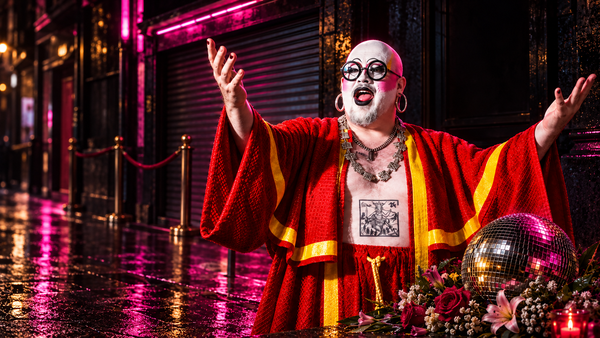
Now I tiptoe. Just in case. Melba's iconic speech delivered chills and tears.
It is a small handful of words doing enormous work. The genius of it is that the fear is not historical. It is not a memory of Section 28 or a story about the bad old days that we can comfort ourselves by saying we have left behind. It is the texture of right now, in 2026, and it was recognised instantly by anyone who has ever clocked the nearest door on their way into a pub, or dropped their partner's hand on a quiet street without quite deciding to. That is why the show is hitting so hard. Davies has named something that thousands of us do every single day and had stopped noticing we were doing.
What you sent us
That recognition is what has filled our inbox, and the messages have not been measured or clever. They have been raw, and they keep arriving.
"I'm not okay," wrote Sean in Cardiff. "I had to turn it off and ring my husband at work just to hear his voice. I couldn't tell him why I was crying."
Robert in Sunderland told us he is forty-seven and ended up sitting on his kitchen floor in tears, with the dog beside him, unable to explain to anyone what had come over him.
"I do that. The tiptoe thing," wrote Tomasz from Coventry. "I didn't even know I did it until he said it out loud. I caught myself checking over my shoulder on the way to the shop today, and then I stood in the bread aisle and cried."
There were messages from people who had never put any of this into words before. Hannah in Nottingham said she texted her mum straight after the episode and told her, for the first time in her life, that she was frightened. Her mum cried too.
Brian, who is sixty-three and wrote to us from Plymouth, said something that stayed with the whole team. He came up in the worst of it, he told us, and had genuinely believed that the younger ones were safe now, that the fear he grew up with had been left behind for good. Watching Melba, he realised he had been wrong, and he wept, he said, not for himself but for them.
The younger readers wrote in too. Niamh, who is nineteen, said she had spent months telling herself she was being dramatic, overreacting, imagining the cold looks. Watching a man four decades older describe the exact same feeling broke something open in her. "It's not in my head," she wrote. "It's real, and someone finally said so."
Dev in Birmingham kept it to two sentences. He and his boyfriend watched it in silence, he told us, and then held onto each other for a long time afterwards because neither of them could speak.
Why it lands
For years the story we have been told, gently at first and then with a kind of impatience, is that things only ever get better. The arc bends in one direction, we are reminded, and we should be grateful for how far it has already travelled. Tip Toe refuses that comfort entirely. By placing the words in the mouth of an older gay man who has lived through all of it, Davies makes the slide backwards impossible to wave away as panic or oversensitivity. Melba has known something better. He is not imagining the chill in the room, and neither, the messages tell us, are the rest of us.
There is grief in what you have sent, but there is relief running underneath it. The relief of being seen, of having the thing you carry quietly every day held up and named and taken seriously by one of the most watched dramas in the country. A feeling that lives in your body and never quite makes it into language can start to feel like a flaw in you. Hearing it spoken by someone else, on a Saturday night, on Channel 4, is its own small act of repair. You are not broken. You are not dramatic. You have simply been paying attention.
We will be covering Tip Toe across the full run, the politics of it, the craft of it, and the conversations it keeps starting in our own community. More than anything, we want to keep hearing from you. If Melba's speech caught you somewhere tender, tell us where it landed and why. The point of a drama like this is not to leave us crying alone in the dark, however necessary that first cry might be. The point is to remember that there was a time we could walk into any room and be seen on purpose, and to decide, together, that we would quite like that back.
Send us your reactions at outcastworld.net. We are reading every single one.