Poland's Tusk Apologises for "Years of Humiliation" as Warsaw Begins Recognising Same-Sex Marriages
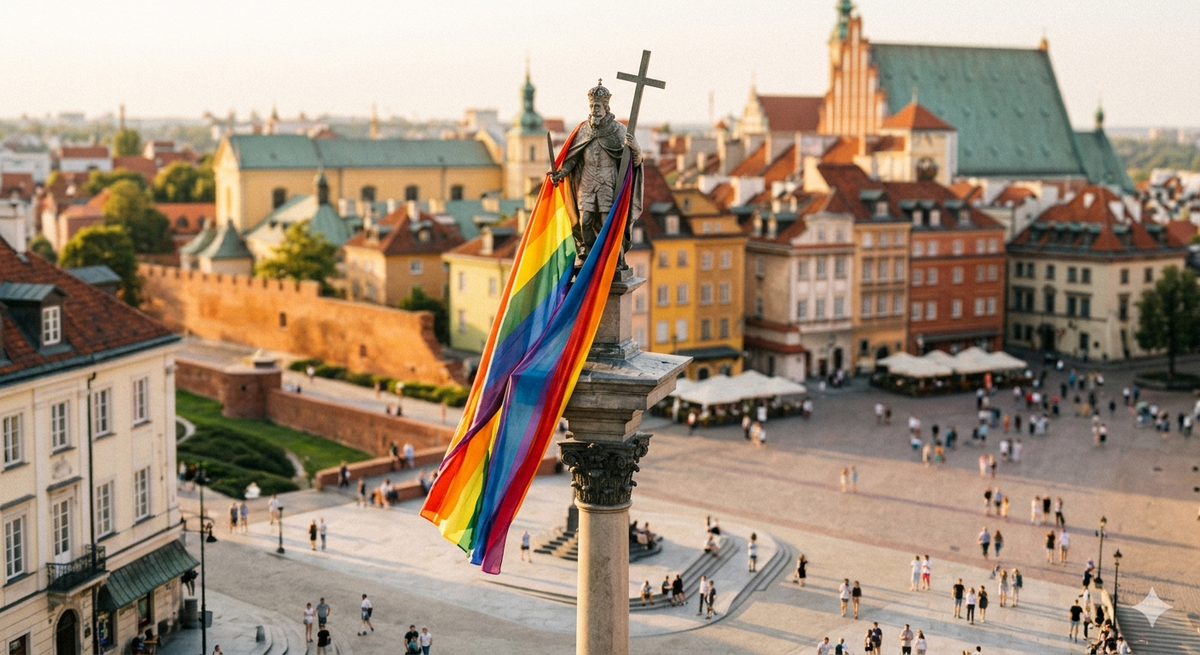
For a generation of LGBTQ+ Poles, the past decade felt like living inside a political experiment designed to prove how much indignity a community could absorb before it broke. Under the Law and Justice party, "LGBT-free zones" were declared across swathes of the country. Municipal governments passed resolutions rejecting "LGBT ideology." The state broadcaster ran segments suggesting that gay people posed a threat to children. Poland became, in the assessment of ILGA-Europe, the worst country in the European Union for LGBTQ+ rights.
On 12 May, that experiment was formally acknowledged as a failure, and from the most senior political office in the land.
Prime Minister Donald Tusk, speaking before a closed cabinet meeting, apologised to same-sex couples for what he described as "years of rejection and humiliation" at the hands of the state. He pledged that his government would move "as soon as possible" to implement court rulings requiring Poland to recognise same-sex marriages conducted in other EU member states. "This is a matter of human dignity," Tusk said. "The right to happiness, the right to equal treatment by the state. I would like to apologise to all those who, for many, many years, felt rejected and humiliated. For many years, the state has failed the test."
The legal groundwork was laid by two significant rulings. In November 2025, the Court of Justice of the European Union determined that member states must recognise same-sex marriages lawfully conducted elsewhere in the bloc for administrative purposes, including residency and family rights. Then in March 2026, Poland's own Supreme Administrative Court ordered Warsaw's civil registry to transcribe the marriage certificate of a same-sex Polish couple who had married in Germany in 2018. The couple had spent nearly a decade fighting for recognition of a union that was entirely legal in the country where it took place.
On the same day as Tusk's announcement, the Mayor of Warsaw, Rafal Trzaskowski, went further. He declared that the city would begin recognising same-sex marriages of Polish citizens conducted in other EU countries immediately, without waiting for the government to finalise its regulatory framework. The move is administratively complex and legally untested, but the symbolism is unmistakable. Warsaw, a city that only a few years ago saw Pride marches met with counter-protests and police cordons, is now leading the country on marriage equality.
It is worth noting the limits of what has been achieved. None of the rulings oblige Poland to legalise same-sex marriage domestically. A bill intended to grant legal rights to same-sex couples was agreed by the ruling coalition in October 2025 and approved by the cabinet in December, but it has still not been brought to a parliamentary vote. Poland's constitution defines marriage as a union between a man and a woman, and amending it would require a two-thirds supermajority. Tusk's coalition does not have those numbers.
But for a country that was issuing state-sponsored homophobia as recently as 2023, the shift is seismic. More than 100 non-governmental organisations wrote to the government last month urging it to act on the court rulings, reminding Tusk that his party was elected on promises to restore the rule of law after a decade of democratic backsliding. The apology matters, not because it erases what happened, but because it places the responsibility where it belongs: with the state that inflicted it.