Róisín Murphy and the policy of the locked door
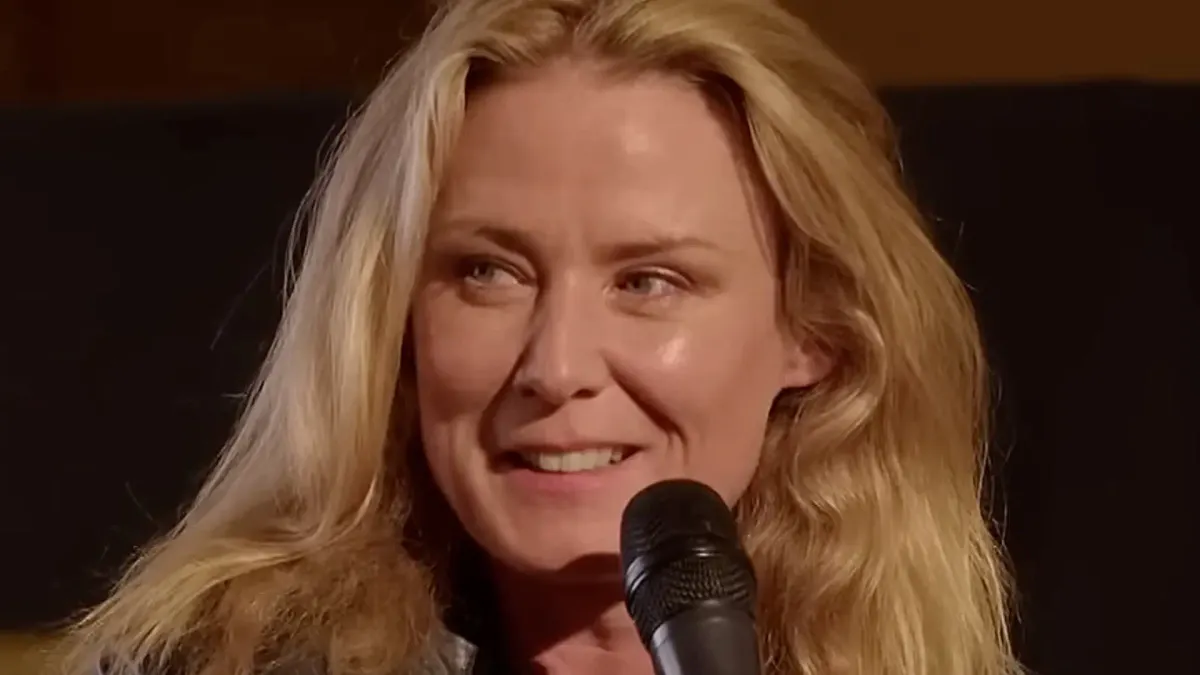
The Moloko singer has reopened a three-year argument about dissent and belonging by telling her followers that trans activists are not wanted at her shows.
There is a grim familiarity to the way a Róisín Murphy controversy now unfolds, a rhythm of post, uproar, clarification and consequence that has repeated often enough to feel almost choreographed. The latest instalment arrived this week, and if anything it pushed the argument onto sharper ground than before.
Late on Monday evening, the Irish singer returned to the subject that has shadowed her for the better part of three years, posting a series of messages on X in which she set out, at some length, her objections to a movement she believes is reshaping the gay community against its own interests. In the course of that thread she wrote that trans people were, as she put it, "piggybacking on their rights movement" and dismantling a shared culture, and she suggested that the number of children coming out as trans was altering the balance of power within the LGBTQ+ world for good.
What turned an already combustible set of opinions into a fresh news story was the line that followed. Pressed by a follower who urged her not to let the row eclipse her music, and who gently reminded her that lesbian, gay, bisexual and trans people had long shared the same spaces, Murphy replied that she needed to know her audience had her back, that an artist was entitled to ground on which she could safely stand, and that she did not want trans activists, whether they knew her views or not, "at my concerts, and neither do my fans". Everyone else, she added, remained welcome.
The qualification did little to soften the reception. On the platform itself the responses arrived quickly and without much sympathy, several of them predicting that she had done lasting damage to her own career, one asking with heavy sarcasm whether ticket-holders would now be required to declare their loyalties at the door, and another suggesting that she might take her tour to Russia, where the authorities have formally branded the LGBT movement extremist. A further reply likened her stance to a child drawing up a list of who would not be invited to a birthday party, the kind of gesture that tends to empty the room rather than fill it.
None of this emerged from nowhere. As the global queer press has reported with weary recognition, the singer has been here before, and the pattern has hardened with each return. In October last year she was removed as headliner of the inaugural Back In Town festival in Istanbul after sharing a graph that, she claimed, showed identification as trans or non-binary collapsing among young Americans, a reading that statisticians quickly dismantled, noting that a fall in the number of people willing to describe themselves that way says far more about a hostile political climate than about any change in who trans people actually are. The festival, which replaced her with the Turkish songwriter Kalben, said her remarks had stripped away the sense of safety it had wanted to offer, and that no fee could buy it back.
The wider music world proved no kinder. The Blessed Madonna, the American producer who is non-binary, recorded a furious video reply in which she told Murphy, in language too blunt to reproduce in full, that she had never been a "queer icon"; the Irish singer-songwriter CMAT, declining to name her directly, wrote that the artist in question was "publicly acting like a bully" and was no voice to be trusted on trans lives. The roots of all this reach back to 2023, when an old Facebook comment in which Murphy attacked puberty blockers resurfaced and detonated, after which her label, Ninja Tune, quietly wound down its promotion of the album Hit Parade and the BBC's 6 Music dropped her from a planned session.
Through every cycle she has reached for the same defence, insisting that she bears no hatred toward trans people and denies no one's right to exist, and yet the distance between that reassurance and her conduct has only grown. It is a strange kind of goodwill that announces itself by deciding who is permitted through the door.
What makes this week's intervention more than a rerun is the move from stating a belief to setting a condition of entry. To hold gender-critical views is one thing; to tell a section of a historically queer audience that it is unwelcome in the room is quite another, and it turns an argument about ideas into something far closer to a bouncer's clipboard. Whether such a policy could ever be enforced is doubtful, since no box office can sort a crowd by conviction, but as a statement of intent it draws a line that the many queer fans who once filled her rooms will read exactly as it was meant. For an artist whose music found its truest home on precisely the dancefloors she now seems so determined to vet, that may turn out to be the most expensive sentence she has ever written.
Reporting compiled from the global queer press, alongside Murphy's own posts on X.