The European Parliament Has Voted to Ban Conversion Therapy. The UK Still Hasn't.
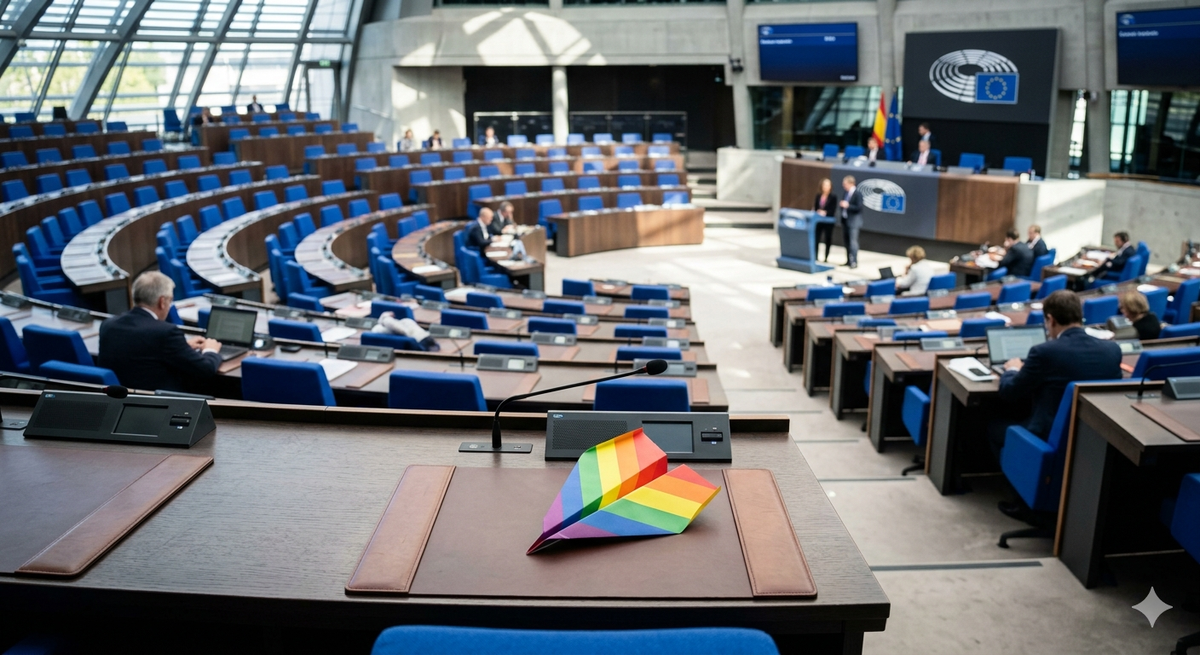
On 29 April, 405 members of the European Parliament voted in favour of an EU-wide ban on conversion therapy. The measure is not yet binding, and the European Commission must still decide whether to take it forward as formal legislation. But it represents the most significant institutional statement against conversion practices that the continent has yet produced, and it arrived through a mechanism that ought to embarrass every government that has promised action and failed to deliver, including, conspicuously, the United Kingdom.
The vote followed a European Citizens' Initiative launched in 2024 by ACT, the European Association Against Conversion Therapy, which gathered more than 1.2 million signatures from citizens across the bloc. That threshold, once met, obliges the European Commission to formally consider the proposal. The Commission responded on 18 May, stating that all EU countries should ban conversion therapy. The European Economic and Social Committee, meeting in the same week, called for stronger enforcement of the EU's LGBTIQ+ Equality Strategy 2026 to 2030, and for a comprehensive ban covering both minors and adults.
Eight EU member states have already introduced outright bans: Malta, which led the way in 2016, followed by Germany, France, Greece, Spain, Belgium, Cyprus and Portugal. Several others have partial restrictions. Norway, which is not an EU member but participates in the European Economic Area, has also banned the practice. According to a 2024 European Parliament briefing, an estimated five per cent of LGBTQ+ people in Europe have been offered conversion therapy, with two per cent having undergone it. The true figures, experts say, are almost certainly higher, because the practices are often informal, religiously motivated, and rarely reported.
The United Kingdom, by contrast, has been promising a ban on conversion therapy since Theresa May's government announced its intention to do so in 2018. Eight years and four prime ministers later, no legislation has been enacted. The current Labour government has described a trans-inclusive conversion therapy ban as a "legislative priority," but the bill has not been introduced to Parliament. The phrase "legislative priority" is doing an extraordinary amount of heavy lifting for something that has not, in any practical sense, been legislated.
The distinction matters, and not only symbolically. Conversion therapy is not a fringe practice confined to religious extremists in the American South. It takes place in counselling rooms, in churches, in family homes, and in community settings across the UK. It includes prayer-based interventions, aversion techniques, and what practitioners euphemistically describe as "therapeutic support" for people struggling with their sexual orientation or gender identity. The evidence that these practices cause serious psychological harm, including depression, anxiety, and suicidality, is overwhelming. The evidence that they achieve their stated aim of changing a person's orientation or identity is nonexistent.
For the European Parliament to act where the UK has not is a pointed rebuke. Britain was once regarded as a global leader on LGBTQ+ rights. It introduced civil partnerships before most of Europe, legalised same-sex marriage in 2014, and was among the first countries to allow openly gay and lesbian people to serve in the armed forces. That reputation now rests on achievements that are between ten and twenty-five years old, while the current direction of policy, from the Supreme Court ruling to the EHRC guidance to the continued absence of a conversion therapy ban, tells a different story altogether.
The EU has shown that the political will exists. What remains to be seen is whether the UK can summon any of its own.