Why Madonna's biopic collapsed, and how the dancefloor brought her home
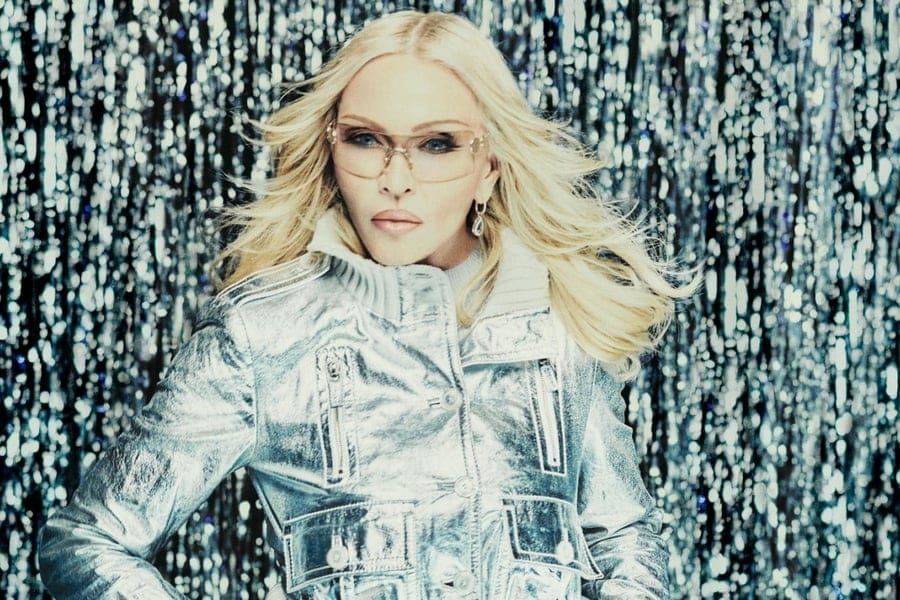
The Queen of Pop has finally confirmed that her long-gestating Universal film, once titled Who's That Girl and set to star Julia Garner, is dead. For the men who grew up worshipping her in the clubs, the consolation could hardly be sweeter.
For the better part of six years, Madonna's fans have been promised a film about her life that she would write and direct herself, and for the better part of six years that film has receded a little further out of reach with every fresh announcement. Now, in a wide-ranging Summer 2026 cover conversation with Interview magazine's editor-in-chief Mel Ottenberg, she has confirmed what the trade press had long suspected, which is that the Universal project collapsed over money and that the Netflix series meant to rescue it never quite came together either. The reason she gives is disarmingly simple. "I've had a huge life, so I needed a big budget," she said, and the studio, by her account, could not be talked into meeting the figure.
Why Madonna's biopic fell apart at Universal
The picture had been in development since 2020, when Universal announced that Madonna would tell her own story after watching several unauthorised versions circle Hollywood, and the years that followed were a slow accumulation of false starts. She spent two years on the screenplay and a further two on budgeting and casting before the relationship soured, and when she proposed shooting more cheaply in Serbia she felt the executives simply did not trust her to see it through. "Maybe they just didn't believe in me," she reflected, recalling that one of their early responses was open scepticism that she would last more than a few days on a Balkan shoot, a doubt she swatted away by pointing out that survival had been the through-line of her entire life.
Anyone who has followed the saga in Deadline, Variety or The Hollywood Reporter will recognise the shape of it. The Oscar-winning Juno writer Diablo Cody worked on an early draft before stepping away, the Secretary screenwriter Erin Cressida Wilson took a later pass, and the singer eventually finished the script alone. The film carried the working title Who's That Girl, a nod to her 1987 single and the comedy of the same name, and the role of the young Madonna had gone to Julia Garner after a gruelling audition process that reportedly put a roster of well-known performers through singing and dancing boot camps.
The Netflix series and the script she could not use
When the Universal version fell apart, she found herself, in her own phrase, in limbo, and it was then that Netflix approached her about reshaping the material as a limited series. That route brought its own absurdities, chief among them that she could not simply reuse her own screenplay, since the studio retained the rights and would only sell them back at what she called an extortionate price. Months of meetings with prospective writers followed, and the search for the right showrunner dragged on without resolution for the better part of a year. The Hollywood Reporter and Deadline both reported in May 2025 that she had partnered with the Deadpool & Wolverine director Shawn Levy on a Netflix bioseries, a venture understood to be separate from the abandoned film and still at an early stage, with Garner said to remain in contention for the lead. The actress herself has spoken warmly of the part on the SmartLess podcast, describing the prospect as very much a work in progress.
From the cutting room to the dancefloor
Here is where the story turns, and where it starts to matter most to the men who have carried Madonna through three decades of Saturday nights. Rather than sink into the disappointment, she poured the creative restlessness into music, reconnecting with the producer Stuart Price, with whom she had not properly worked since the original Confessions on a Dance Floor two decades earlier, and setting about a sequel. Confessions on a Dance Floor: Part II grew out of her conviction that the world had turned dark and that people needed somewhere to move their bodies again, which is about as neat a summary of the gay clubbing impulse as anyone has managed.
It is no accident that this is the ground she returns to when everything else gives way. The Interview piece lingers on her earliest nights at Danceteria in 1982, a broke and friendless dancer waved past the velvet rope by Martin Burgoyne, the beautiful blonde scene fixture who became her closest companion before AIDS took him only a few years later. That world of misfits and outsiders, she remembers, made her feel part of a community without a single word being exchanged, and her counsel to anyone who feels like a failure has not softened with age. "Go out dancing because it will save you," she said. For a generation of gay men who found their own sanctuary on those same floors, and who lost so many of their own in the very years she lost Martin, the line reaches somewhere far below mere nostalgia.
Why this one stings, and why it may not matter
There is a real loss buried in all of this, because a Madonna film authored and directed by Madonna would have been a singular thing, and the prospect of Garner inhabiting the Blond Ambition years carried a genuine charge. Yet there is an argument, and her queer audience will feel it in the gut before they can articulate it, that a record was always going to be the truer memoir. The new album, arriving almost twenty years to the season after its predecessor, is unashamedly confessional, threaded through with the deaths of her brother Christopher and her estranged stepmother and built on the belief that the dancefloor is the one place where grief and joy are allowed to share a room. Hollywood may yet circle back, as Hollywood reliably does, but for the moment the woman who taught so many of us how to feel everything at once has done the most Madonna thing imaginable, which is to turn a broken studio deal into a reason to dance.
Reporting draws on Madonna's Interview magazine cover story with Mel Ottenberg, alongside coverage in The Hollywood Reporter, Deadline and the wider entertainment press.