London Police reopen Ed Cornes case, and face old questions about how it investigates the deaths of gay men
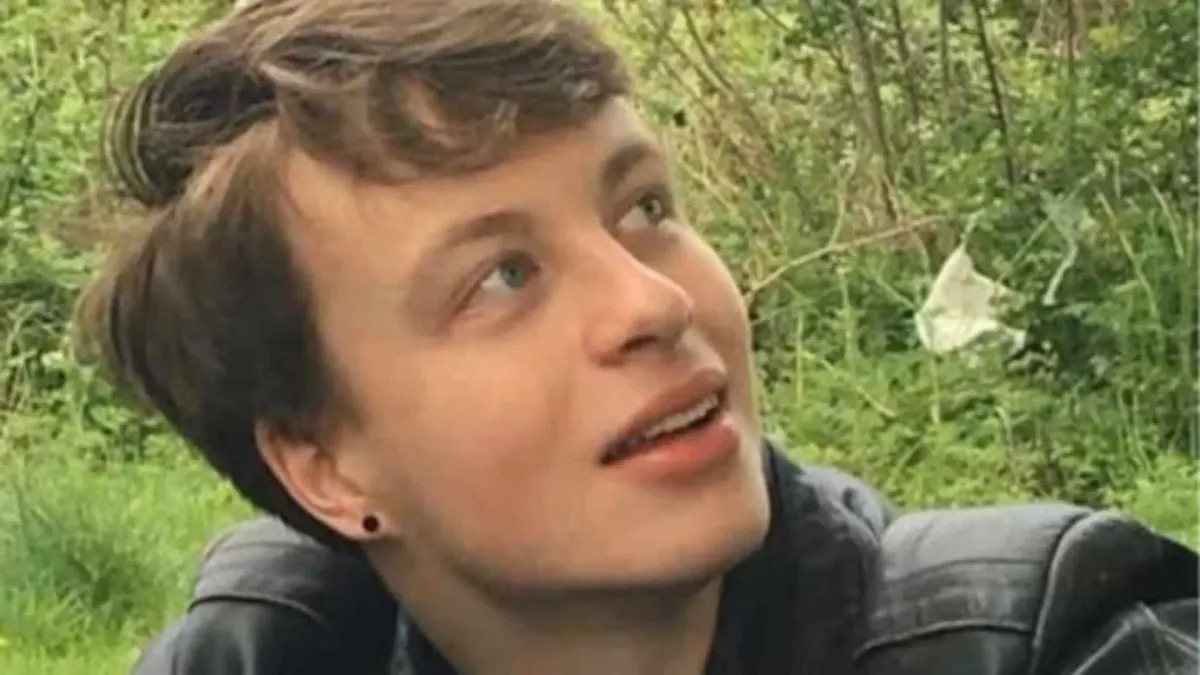
Almost five years after a nineteen-year-old gay student was found dead in a King's Cross hotel basement, the Metropolitan Police has reopened its investigation and apologised to his family. For Ed Cornes's mother, and for a community that has heard the Met apologise before, the gesture lands somewhere between vindication and insult.
On Monday the Metropolitan Police confirmed that specialist officers will reopen the investigation into the death of Ed Cornes, the University College London student who died in October 2021, and that the force has apologised to his family for the way the original inquiry was handled. In a statement, the Met accepted that aspects of the initial investigation had not been handled correctly and had failed to meet the standards it expects, said it had met the family to apologise in person, and confirmed that officers are now reviewing the case to establish whether any further lines of enquiry remain. A separate investigation by the Independent Office for Police Conduct, examining how the force handled the original inquiry, the inquest and its dealings with the family, continues.
For most families an apology and a reopened file might read as progress. Ed's mother, Miriam Blythe, was more measured. Speaking to ITV News, she called the move shallow and described it as too little, too late, while allowing that it amounted, at least, to a small victory. Her ambivalence is earned. She has spent the better part of four years insisting she was right while, as she puts it, officer after officer told her she was wrong. A parent whose child dies in horrifying circumstances should not then have to argue the case for taking that death seriously. That she has had to do exactly that is the story underneath the story.
Why we have not named anyone
Some of those connected to the early stages of this case were named elsewhere at the time. We have chosen not to name anyone here, and the choice is deliberate, so it is worth setting out plainly.
This case has just been reopened. That means the legal position is no longer settled, and it could change again. If we were to identify a person, or to suggest in any way what anyone did or did not do on the night Ed died, and matters later moved towards charges and a trial, our words would already be sitting in the public record, capable of prejudicing those proceedings. Anything published across any form of media can risk the very justice that Ed's family is asking for, and we are not prepared to be the reason a future case is harder to bring.
We we take the view that this is the single most serious risk available to us in telling this story, and the right response to a risk of that order is not to weigh up how likely we would be to get away with it. Out of an abundance of caution, and out of respect for Ed's family and for the people who loved him, we will not identify anyone named in earlier reports, and we will not speculate about responsibility.
Because none of this blunts the point. The failures set out below are failures of the police, and they are a matter of public record. They can be told in full.
What is known about Ed Cornes
Ed Cornes was nineteen years old, gay, and by every account adored. He had grown up in Barnet, arrived at University College London with the ambition of training for the Bar, and had been a student for barely forty-eight hours when he died in October 2021. His mother, Miriam Blythe, has described him as her best friend and as the funniest and sweetest person she knew. His sister, Robyn, and his close friends have spoken about him in the same terms. These are the details that tend to disappear once a young gay man's death is reduced to a toxicology report and a list of mislaid exhibits, so they are worth stating first.
Ed was found dead in a room at a hotel near King's Cross, a short distance from his halls of residence. A post-mortem examination recorded high levels of GHB in his bloodstream, alongside alcohol and methamphetamine. The coroner concluded that the death was drug-related and found no evidence of assault, despite 36 cuts and injuries to his body and the inquest upheld the conclusion that there had been no third-party involvement. For a period the death was treated as a potential murder, and it was during that phase that people who were named in initial reports were arrested and then released without charge. No one named in those reports has been charged with any offence. Those are the established facts, and they are the proper starting point for everything that follows.
Where the investigation fell short
If the cause of death is settled in law, the conduct of the investigation is not, and it is on that ground that the family has fought for four years. An internal review by the Metropolitan Police identified twenty-seven separate failings in the original inquiry. Twenty-seven is not the arithmetic of an unfortunate oversight. It is the description of a process that, at multiple points, did not do what it should have done.
The specifics are not abstract. The family says that key witnesses, among them the receptionist at Ed's halls and a driver who had carried him that night, were not interviewed in good time. They say that evidence went missing or was lost, including CCTV footage, a blood sample, and a range of items recovered from the scene that later disappeared from a locked evidence room. They say that an investigation which should have kept every option open instead narrowed quickly towards the least troubling explanation. And they say it did so against a backdrop of remarks that revealed how officers were thinking. Blythe has said that her son was referred to as a rent boy, and that an officer commented, of the circumstances, that with man-on-man sex anything can happen. The Met has acknowledged that this comment was made and has apologised for the distress it caused. Ed's best friend, Sam Price, has said the homophobia was present from the very beginning. His sister has described the failures as a repeated retraumatisation.
It is this record that the force has now formally acknowledged. In its statement the Met accepted that aspects of the original investigation had not been handled correctly and had fallen below the standards it expects, said it had met the family to apologise in person, and confirmed that specialist officers are reviewing the case to establish whether any further lines of enquiry remain. A separate investigation by the Independent Office for Police Conduct, which is examining the handling of the original inquiry, the inquest and the force's communication with the family, continues.
For most families an apology and a reopened file might read as straightforward progress. Blythe was more guarded. Speaking to ITV News she called the move shallow and described it as too little, too late, while allowing that it amounted, at least, to a small victory. Her ambivalence is earned. A parent whose child dies should not then have to spend years arguing that the death deserves to be investigated properly, and she has said that for much of that time officer after officer told her she was wrong.
A pattern the Met has been told about before
The reason this case carries weight beyond one grieving household is that the criticism levelled at the investigation is not new to the Metropolitan Police. It is, in almost every particular, criticism the force has heard before and has been formally found to deserve.
In 2023 the Casey Review, commissioned in the wake of Sarah Everard's murder, concluded that the Met is institutionally homophobic, alongside being institutionally racist and sexist. Baroness Casey linked the collapse of trust among LGBTQ+ Londoners directly to the force's handling of cases involving gay victims and to what she described as an institutional defensiveness more concerned with reputation than with rebuilding that trust. The touchstone for that finding was the Met's investigation into the murders committed by Stephen Port, in which the force failed for a long time to recognise that a series of similar deaths of young gay men were connected, or even that they were murders, and acted decisively only bereaved families pressed it to. A later inspection by His Majesty's Inspectorate of Constabulary warned that the failings exposed by that case could happen again.
The relevance of all this needs to be stated carefully, because it is narrow and specific. What these earlier findings concern is the conduct, culture and competence of the Metropolitan Police, and in particular a documented tendency to approach the deaths of gay men with assumptions that shape the investigation before the evidence does. They are raised here as a comment on the force, not as any suggestion that the circumstances of Ed's death resembled those of any other case, and emphatically not as any inference about anyone named in earlier reports. The point is about how the police look at cases like this, not about what happened in this one.
That distinction is exactly the one the family's solicitor, Neil Hudgell, has drawn. Hudgell, who also acted for the families of Stephen Port's victims, has been blunt about a mindset he says he has seen before, in which the deaths of young gay men who have been drinking or taking drugs are quietly treated as a kind of occupational hazard, sad but unsurprising and therefore not worth the full weight of an inquiry. His criticism is of that institutional reflex. It is not a claim about the identity of any individual.
Why an apology is not the same as an answer
There is a specific harm in the reflex Hudgell describes. When a young gay man dies with drugs in his system, an old assumption can take hold that treats the death as self-explanatory, and a self-explanatory death is one that nobody feels obliged to interrogate. The family's enduring objection is not that any particular conclusion was reached, but that the questions were closed down too early, and that the evidence which might have answered them with confidence was allowed to slip away. An apology can address a careless remark and a mislaid sample. It is far harder for it to reach the prior assumption that made the carelessness feel acceptable at the time.
That is why the family is now asking for the case to be handed to a different police force entirely, and for a fresh inquest, on the reasoning that a force which has already settled on its account cannot be the one to test it. It is not an unreasonable request. It is the logical conclusion of everything the Met has already conceded. For now, the reopened review and the continuing IOPC investigation mean that a case which sat still for years is, at last, formally moving. Whether it arrives anywhere is a different question. Blythe has said she hopes justice will be served in the end, which is about as far as anyone in her position can responsibly go. The rest of us are entitled to be less serene. Until the Metropolitan Police can explain why it took four years and a national broadcaster to force a serious second look at a teenager's death, the apology is the easy part, and everyone involved understands as much.