“I Was in a Non-Consensual Non-Monogamous Relationship”: BBC Queer TV Star Gareth Valentino Opens Up
There is a particular kind of modern queer discourse that treats open relationships as a sign of emotional evolution. A marker of honesty. Maturity. Enlightenment, even. Scroll through enough dating profiles in east London or Brooklyn and eventually it begins to feel less like an alternative lifestyle and more like a professional expectation.
The reality, of course, is often much messier.
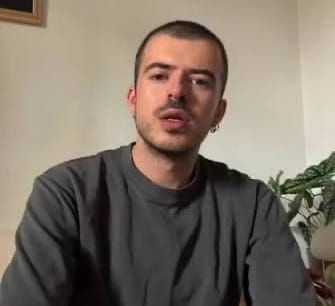
Speaking on the latest episode of Outcast World, I Kissed A Boy star Gareth Valentino gave a strikingly candid account of a relationship that gradually collapsed under the weight of secrecy, infidelity and what he described as “non-consensual non-monogamy”.
“I went home to Ireland to visit family,” Valentino explained. “Then people started messaging me saying there were loads of men at my partner’s flat. Drugs, parties, loads going on. They sent photos.”
The flat, he realised, was full of strangers. The relationship he thought he was in clearly was not.
At first, the story sounds familiar in the way many modern dating stories do. A breakdown in communication. A betrayal. An attempt to renegotiate boundaries after trust has already disappeared. But the details become more unsettling as Valentino continues.
After confronting his partner, he says he attempted to make the relationship work, including discussing openness more formally. The imbalance, however, remained.
“I was trying to adapt to something I hadn’t agreed to in the first place,” he said.
Then came another revelation. Valentino later learned that his former partner had been HIV positive throughout the relationship and had never disclosed it.
“It’s absolutely fine to be HIV positive,” he said carefully. “That’s not the issue. But if you love someone, you should be able to tell them.”
It is a distinction many queer people will immediately recognise. The medical reality of HIV in 2026 is radically different from the fear-drenched narratives of previous decades. Someone who is undetectable cannot pass the virus on sexually. Public understanding, however, often lags behind science, while shame and stigma continue to shape how people navigate disclosure, intimacy and trust.
That tension sits underneath much of the conversation around modern queer relationships. Not simply sex, but secrecy. Not openness, necessarily, but avoidance.
Valentino’s description of “non-consensual non-monogamy” may sound flippant at first, internet therapy language repurposed into a punchline, but it points towards something increasingly common within contemporary dating culture, particularly among gay men. Relationships in which exclusivity is assumed by one person and quietly abandoned by the other. Boundaries that only become negotiable after they have already been crossed.
The language of emotional progressiveness can sometimes obscure fairly traditional forms of selfishness.
Host Graeme Smith, who has spoken publicly about open relationships himself, suggested that queer men are often still trying to negotiate intimacy through layers of internalised shame and survival mechanisms inherited from earlier generations.
“Men are still men,” he observed at one point during the discussion, after a long detour into gay male competitiveness, status anxiety and the tendency for queer communities to turn on themselves.
It is difficult to separate those dynamics from the broader culture that produced them. Gay male social life, particularly in large cities, often rewards detachment, sexual access and performative confidence while punishing vulnerability. Apps have accelerated that logic. Visibility has commercialised it. Therapy language has occasionally dressed it up as self-actualisation.
And yet beneath the surface there remains a striking amount of loneliness.
What gives Valentino’s account its force is not really the scandalous details, although there are plenty of those, but the sense of emotional exhaustion underneath it. The attempt to modernise yourself into accepting something your instincts are telling you is damaging. The pressure to appear evolved enough not to mind.
Elsewhere in the conversation, Amy Spalding, who appeared on I Kissed A Girl, admitted she struggled to imagine non-monogamy working for her at all.
“When I’m in love, I can’t picture it,” she said simply.
That tension, between liberation and stability, autonomy and reassurance, sits quietly underneath a huge amount of contemporary queer life. It is often discussed in ideological terms online, but in practice tends to collapse back into much older questions. Trust. Security. Honesty. Care.
Or, put more bluntly, whether the person beside you is telling the truth.
Increasingly, the most interesting queer conversations are not happening in polished television formats or brand-safe campaigns about visibility. They are happening in spaces where people are prepared to sound contradictory, wounded, uncertain or occasionally unfair.
That may ultimately be why podcasts have become such a natural home for these discussions.