“There’s No Worse Enemy”: Why Gay Men Still Turn on Each Other

For all the progress in queer visibility, some dynamics within the community remain stubbornly unchanged.
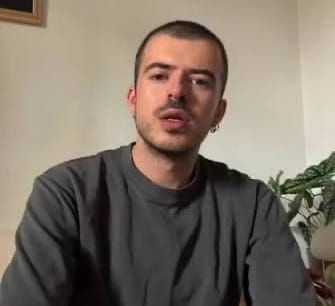
One of the more uncomfortable themes to emerge from a recent Outcast World interview with Gareth Valentino and Amy Spalding was the question of why gay men can be so hostile to each other.
“There’s no worse enemy for gay men than gay men,” host Graeme Smith observed, only half-joking.
Valentino didn’t entirely disagree. He described moments of open hostility from other men, including being dismissed or treated with visible disdain in social settings for no obvious reason.
“I’d smile at people and they’d just look at me and walk away,” he recalled. “It’s a completely different experience to what Amy sees in lesbian spaces.”
Spalding, who comes from a community she describes as far more supportive, drew a stark contrast.
“Lesbians rally for each other,” she said. “There’s this idea there’s space for everyone at the top. I don’t think that exists in the same way with gay men.”
The explanation offered was not especially comfortable.
Both pointed toward a mixture of internalised homophobia and a kind of competitive scarcity mindset, the sense that there is only room for a limited number of openly successful, visible gay men.
“I think it’s internalised,” Spalding said. “And I think some people need therapy.”
Smith, drawing on his own experience, acknowledged that this isn’t a new phenomenon.
“I’ve been through phases of that thinking myself,” he admitted. “Where you almost reject your own community.”
That internal conflict, shaped by years of social stigma and reinforced by cultural expectations around masculinity, continues to surface even in more outwardly progressive environments.
The conversation also touched on how these tensions play out in public discourse.
From social media pile-ons to private group chats, the mechanisms of judgement have simply evolved with the platforms. Valentino shared an example of being objectified and discussed in a group chat without consent, a small but telling instance of how quickly admiration can turn into scrutiny.
“Gay men are horrible,” he said, before quickly softening it. “Not all the time. But it happens.”
What emerges is not a simple narrative of “toxic culture”, but something more layered.
Progress has made queer lives more visible, but it has not automatically resolved the psychological legacy of growing up in environments where that visibility was discouraged, or punished.
As Smith put it, “It’s complex.”
That complexity, and the willingness to sit with it rather than flatten it into something more palatable, is increasingly where the most honest conversations in queer media are now taking place.