Queer Clubs Were Never Just About Dancing
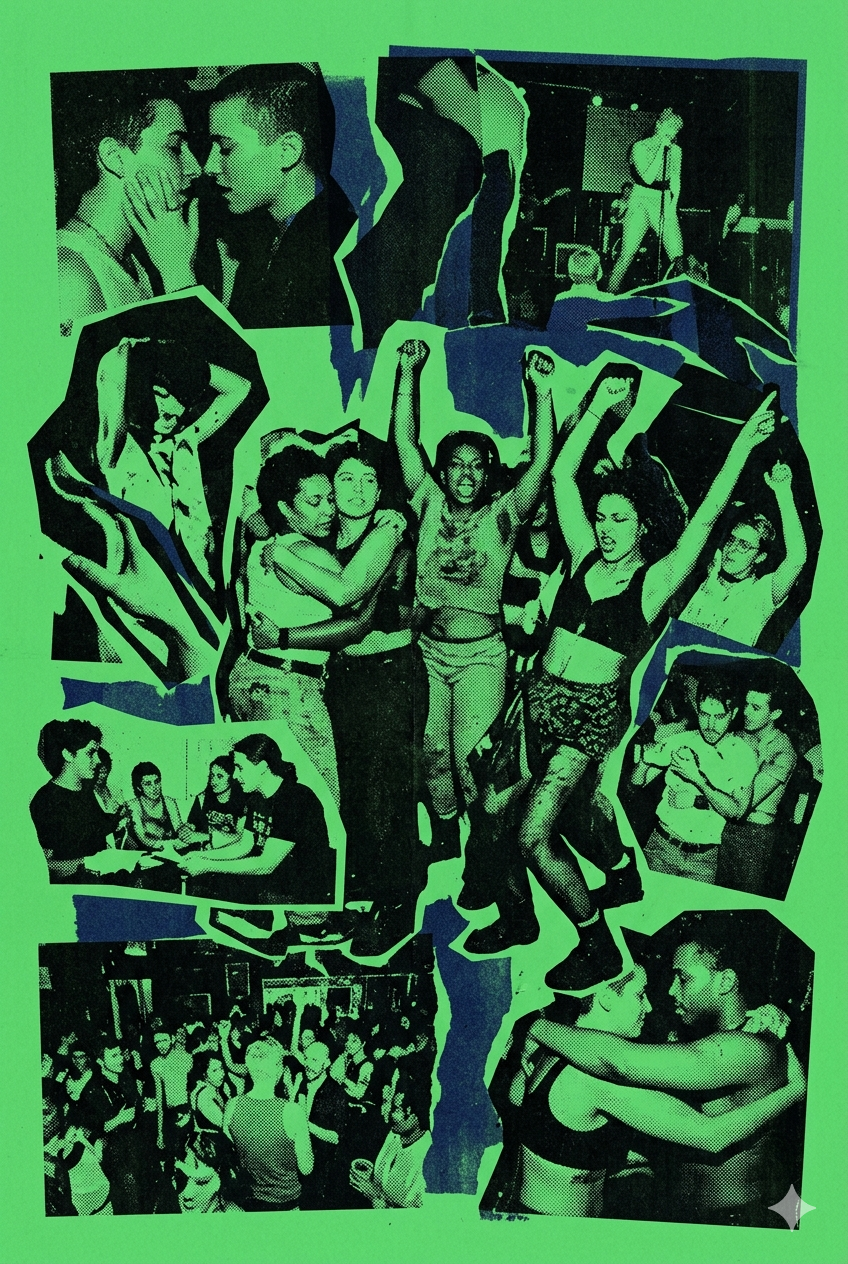
For generations, queer nightlife has functioned as far more than nightlife. Long before corporations began wrapping themselves in rainbow branding every June, bars, clubs, warehouse parties and late-night venues were among the very few places LGBTQ+ people could exist openly, meet each other safely and construct a sense of community that often did not exist anywhere else in public life. They were social spaces, certainly, but they were also political, emotional and practical infrastructure, especially during periods when queer identity itself was treated with suspicion, ridicule or outright hostility.
A new report from Time Out, produced alongside Gay Times, suggests that infrastructure is now under growing pressure across Britain and beyond. The report, titled The Right to Dance: Queer Nightlife in 2026, surveyed hundreds of LGBTQ+ people about the state of queer venues and the findings reveal a scene that many increasingly feel is shrinking, fragmenting and becoming harder to access. Three quarters of respondents said queer venues in their local area had declined in recent years, while more than eighty percent believed those losses had directly damaged their sense of connection to the wider queer community.
What emerges from the report is not simply anxiety about nightlife itself, but a broader concern about what happens when queer people lose physical space. That distinction matters. Straight audiences often frame queer venues as little more than entertainment, places to drink, flirt or dance until three in the morning, but historically they have performed a much deeper role than that. For many people, particularly those coming out in difficult environments or living in places where queer life remains marginalised, these venues were where identity first became real. Friendships formed there. Political movements formed there. Entire social networks, careers and relationships emerged from scenes that existed largely outside mainstream culture.
The report includes a line from London Trans+ Pride founder Lewis G Burton which captures that feeling neatly: “religious people have churches, queer people have clubs.” It sounds dramatic until you consider how many LGBTQ+ people historically found acceptance, intimacy and collective belonging in nightlife spaces long before they found it anywhere else.
Part of what makes the timing of this report feel significant is the wider political backdrop against which it arrives. Across Britain, the United States and parts of Europe, public discourse around LGBTQ+ rights has become noticeably harsher over the past few years, particularly around trans identities, drag culture and the visibility of queer people in public life. At precisely the moment many queer people feel politically exposed again, the physical spaces where communities gather are becoming increasingly precarious.
The reasons are depressingly familiar to anyone who has watched modern cities flatten independent culture in favour of investment opportunities. Rising rents, redevelopment, licensing pressures and the broader financial collapse of nightlife economies all feature heavily in the report. Queer venues, which have often relied on precarious margins and community goodwill rather than huge commercial backing, are especially vulnerable to that pressure. In city after city, clubs disappear and are replaced by luxury flats, chain hospitality or vaguely “creative” mixed-use developments marketed toward wealthier incoming residents.
London, of course, has seen this pattern repeatedly over the last fifteen years. Entire areas once associated with queer nightlife and alternative culture have gradually been transformed into polished investment zones where the culture that made those neighbourhoods desirable in the first place can no longer afford to survive.
Yet the report is not entirely bleak. In fact, one of its more interesting observations is that queer nightlife itself is not disappearing so much as changing shape. Increasingly, energy appears to be shifting away from large commercial venues and toward smaller community-led events, temporary spaces, independent collectives and hybrid creative nights that blur the boundaries between club culture, activism, performance and art. More than half of respondents said they believed community-driven models represented the future of queer nightlife.
That feels consistent with broader shifts taking place across queer culture generally. There is a noticeable exhaustion with heavily commercialised “mainstream gay” culture, particularly among younger audiences who often appear more interested in spaces that feel politically engaged, creatively unpredictable and socially mixed rather than sanitised and consumption-led. The current resurgence of smaller queer collectives, DIY parties and interdisciplinary creative scenes feels less like a brand new development than a return to older traditions that existed before corporate assimilation softened much of queer nightlife into something safer and easier to market.
Historically, queer culture has always adapted under pressure. Some of the most influential queer scenes emerged from improvised conditions, from basement bars and temporary venues to illegal warehouse parties and after-hours spaces operating well outside institutional approval. In many respects, today’s landscape resembles a version of that history repeating itself.
The difficulty, however, is sustainability. Survival cannot permanently depend on volunteers, exhaustion and precarious economics. The report argues that queer venues should increasingly be treated as culturally significant spaces deserving of protection, funding and meaningful policy support rather than simply being viewed as ordinary nightlife businesses left entirely to market forces. It is difficult to argue with that logic when so many cities now enthusiastically celebrate diversity while simultaneously pricing out many of the communities responsible for creating the cultural identity they later monetise.
Perhaps the report’s most reassuring finding is also its simplest. Despite all of this, ninety percent of respondents said they would still travel significant distances for the right queer night, crowd or atmosphere. That statistic suggests the appetite for these spaces remains extremely strong because the need they fulfil has not disappeared. People still want spaces where they feel visible, understood and socially connected in ways that extend beyond algorithmic culture and temporary online discourse.
Queer nightlife is not vanishing because queer people stopped caring about it. If anything, the opposite appears true. The problem is that maintaining independent physical culture inside increasingly expensive global cities has become harder with every passing year. The community, meanwhile, continues doing what it has always done when pushed into a corner: rebuilding itself anyway.