PORTUGAL: THE COUNTRY THAT'S TRYING TO UN-PROGRESS
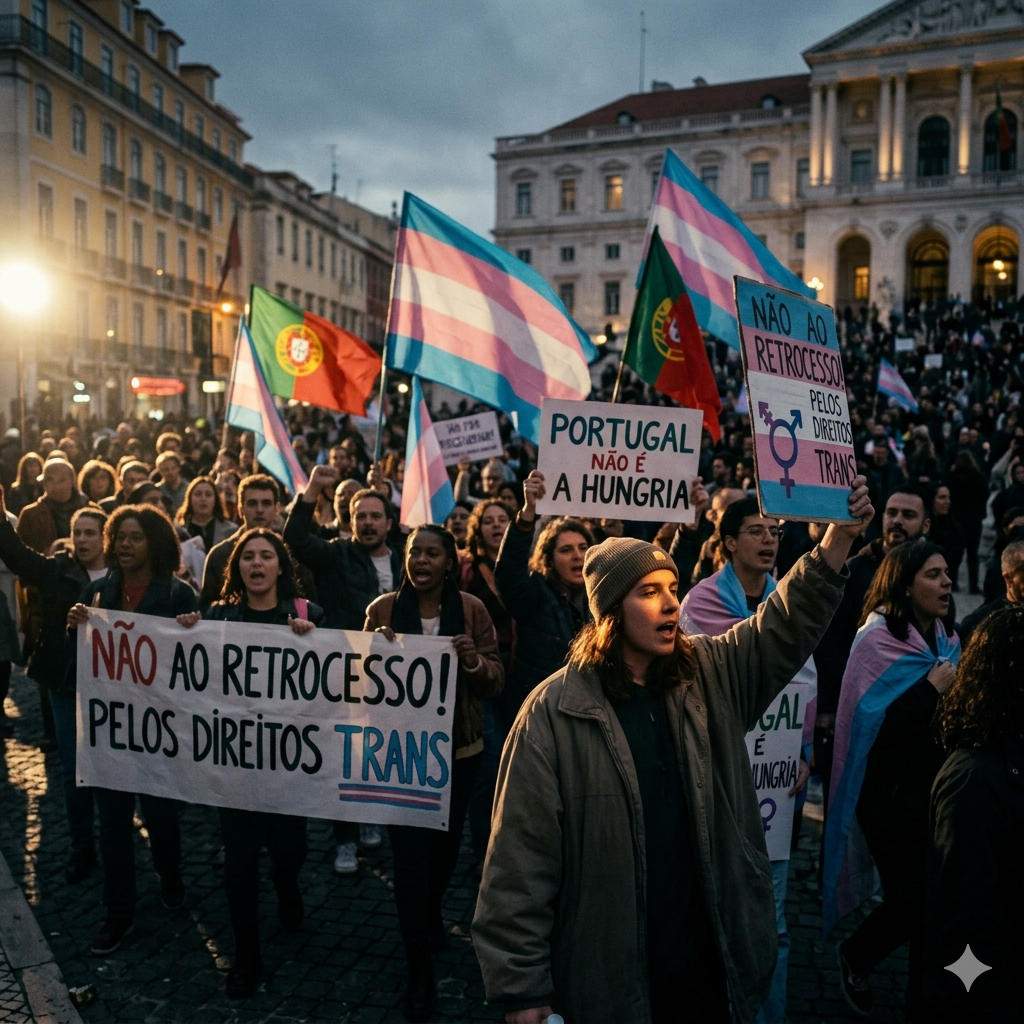
Last week, Portugal's parliament voted 151 to 79 to advance three bills that would systematically dismantle some of Europe's most progressive gender recognition laws. The bills haven't become law yet — they still need committee review and a final vote — but the direction of travel is unmistakable. A country that was once held up by the UN Human Rights Council as a model of best practice is now being compared to Hungary.
Here's what's on the table. The first bill, from the governing centre-right PSD party, would revoke Portugal's 2018 self-determination law entirely, forcing trans people to obtain a formal diagnosis of "gender incongruence" from a multidisciplinary medical team before changing their name or gender marker. That's a return to the 2011 framework — a system that treats being trans as a disorder requiring clinical validation, which is exactly what campaigners spent years fighting to eliminate.
The second bill, from the far-right Chega party, goes further: banning all gender-affirming care for under-18s, prohibiting discussion of "gender ideology" in schools, and — in a move that horrified intersex advocates — reopening the door to medically unnecessary interventions on intersex children. The third bill, from CDS-PP, layers in additional medical gatekeeping requirements.
After the vote, Chega's parliamentary leader declared victory: "A man will always be a man and a woman will always be a woman." CDS-PP's representative called gender-affirming care for minors "the greatest delusion of wokism against children in Portugal." The language was borrowed directly from the American far right. The playbook is identical.
Outside parliament, over 200 people gathered in the rain. They carried trans and rainbow flags. Their signs read "My name is not a debate" and "We are not diagnoses." ILGA Portugal, Opus Diversidades, and other organisations mobilised quickly, but the maths inside the building were against them.
The international response has been fierce. Six of Europe's leading LGBTQ+ organisations issued a joint statement warning that the bills represent a serious attack on rights and dignity. Outright International called for the EU and Council of Europe to take action. Forbidden Colours drew explicit parallels with Hungary's slide into democratic backsliding, saying: "This is how it begins."
What makes Portugal's situation so alarming is the speed. In 2018, the country was a European leader. In 2026, it's retreating. The self-determination model — which allows people to change their legal gender through a simple administrative process, without psychiatric gatekeeping — is now the primary target of anti-rights movements across Western Europe. Portugal isn't an outlier. It's the test case.
The bills still have to survive committee. There's still a chance they'll be amended or blocked. But the preliminary vote passed with a commanding majority, and the political coalition behind the rollback — governing party plus far right — has the numbers to push it through.
If Portugal falls, other countries will follow.