Reform UK’s rise should concern every LGBTQ+ person in Britain
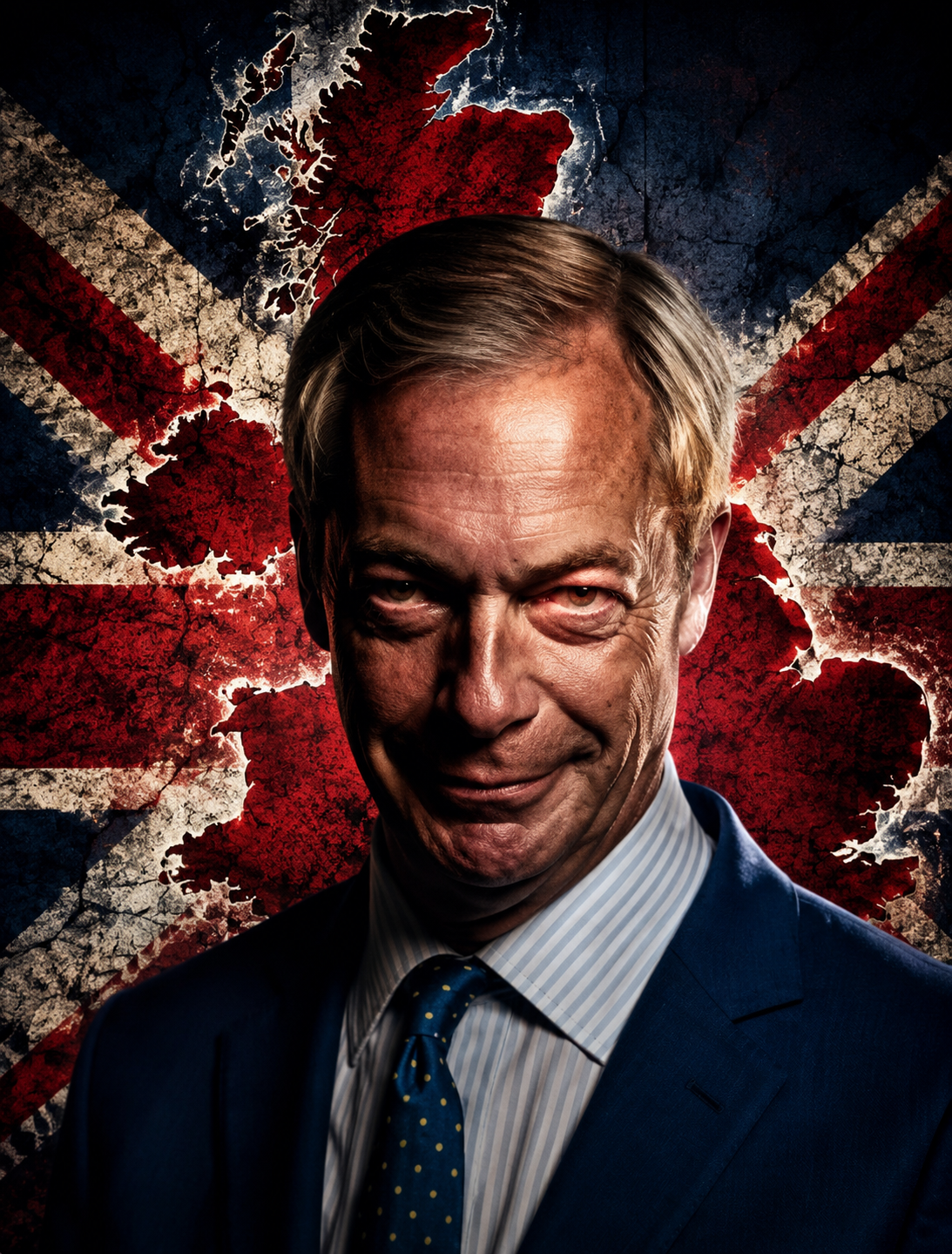
There is also a wider electoral context here which makes Reform’s rise more serious than many liberals still seem willing to admit. The local elections across England, Scotland and Wales this week were not a minor protest vote or an isolated anti-government wobble. They pointed instead toward a rapidly fragmenting political system in which the traditional Labour–Conservative duopoly is visibly breaking apart. Reform UK emerged as one of the major winners of the elections, taking councils, gaining hundreds of seats and establishing itself as a genuine national force rather than a fringe insurgency.
The numbers underneath that shift are politically extraordinary. Recent YouGov polling now places Reform UK on roughly 25–26 per cent nationally, making Nigel Farage’s party the single largest political force in Britain by vote share. But perhaps more interestingly, the Green Party is now also surging into historically unprecedented territory, polling around 15–19 per cent in some national and regional projections and increasingly competing directly with Labour in progressive urban areas.
That matters because it suggests Britain is not simply moving rightwards. It is polarising and splintering simultaneously.
The old political centre is collapsing from both directions at once. Reform is consolidating economically anxious, culturally conservative and anti-establishment voters, particularly in post-industrial towns and outer suburban England, while the Greens are increasingly becoming the vehicle for younger, urban, socially liberal voters who feel Labour has become managerial, timid and ideologically hollow. Labour and the Conservatives now often find themselves squeezed awkwardly in the middle, with both parties polling below levels that would once have been considered catastrophic.
For LGBTQ+ people, this creates a far more unstable political environment than the relatively settled liberal consensus Britain experienced through much of the 2010s.
On one side, an emboldened populist right is importing increasingly aggressive anti-“woke” rhetoric directly from the United States. On the other, younger progressive voters are becoming more radicalised around issues including climate, Palestine, trans rights and economic inequality, often feeling abandoned by mainstream centre-left politics altogether. The result is a political landscape where culture war politics becomes more emotionally intense, more online, and far less predictable.
And in fragmented political systems, minorities often become symbolic battlegrounds.
You can already see that beginning to happen around trans rights in Britain. What started a few years ago as a relatively niche media fixation has now become a defining fault line in national politics, discussed obsessively across newspapers, television panels and parliamentary debate. Reform understands that culture war conflict mobilises attention and emotional loyalty far more effectively than technocratic policymaking. Increasingly, parts of the Conservative Party do too.
The danger is not simply that Reform wins power outright. It is that its rhetoric shifts the gravitational centre of British politics itself. Once anti-LGBTQ+ narratives become normalised inside mainstream political discourse, other parties often begin quietly adapting to them rather than confronting them directly.
That process is already underway.