The English Football Association’s trans football ban is here, and the damage is already clear
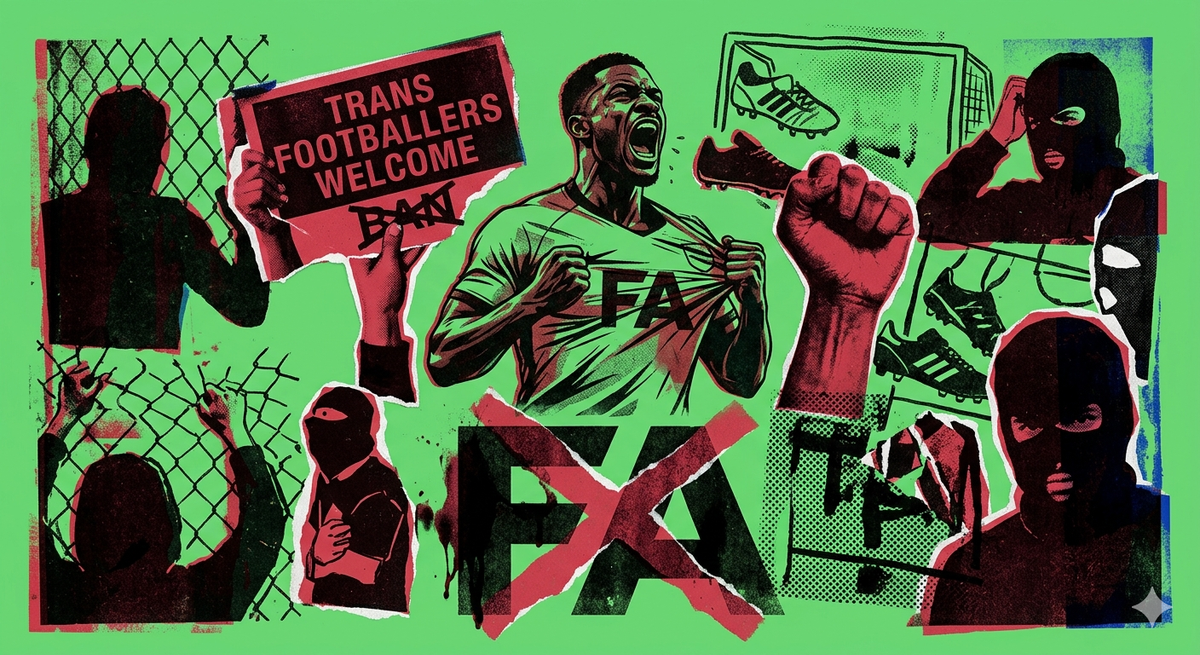
The Football Association’s ban on trans women in women’s football has now come into force, and whatever language gets wrapped around it, the reality is stark: a group of women are being pushed out of the game because of who they are. This is not some abstract policy debate for the pages of a think tank report. It is a live decision with real people at the centre of it, and the consequences are practical, emotional and cultural all at once.
What makes this story so significant is that football is not just football. In Britain especially, it is one of the clearest places where belonging is either granted or withheld in public. To play the game is to participate in a civic ritual, one that says who gets to take part, who gets to be seen, and who gets to occupy shared space without apology. When a trans ban lands there, it tells a wider story about whose presence is still treated as negotiable.
The FA will say it is responding to policy, legal pressure or questions of fairness. But the problem is that “fairness” has become the most convenient cover for exclusion, and it is rarely neutral in practice. It tends to be invoked at the exact moment trans people are being asked to absorb the cost of everyone else’s discomfort. That is why this story matters beyond the pitch. It fits a broader pattern in which trans people are told they can belong, provided that belonging is invisible, conditional or easily revoked.
For queer readers, the point is not to repeat the culture-war script. It is to ask who benefits when a governing body frames exclusion as common sense. It is to ask why trans women are so often treated as a test case for institutions that want to appear decisive without ever having to be compassionate. And it is to ask what kind of sport, or society, is being built when participation is narrowed rather than expanded.
There is also a deeper political cost here. Once a major body like the FA moves in this direction, it gives permission to others. Schools, local clubs, universities and amateur leagues do not operate in a vacuum. They read the mood. They watch what the big organisations do. A ban at the top reverberates far below it, where the people least able to push back are often the ones who feel the impact first.
The debate will continue, but the human cost is already here. Trans women who have given time, energy and love to football are being forced to reckon with a system that has decided their inclusion is too difficult to sustain. That is not neutrality. That is exclusion dressed up as administration.